Water Damage Restoration
Dry the structure and rebuild it after a leak, a burst pipe or an appliance failure.
A burst pipe can put a gallon a second into a wall. The first job is stopping the water, and the second is repairing the split so it holds.
Close the main valve before you call if you can reach it safely.
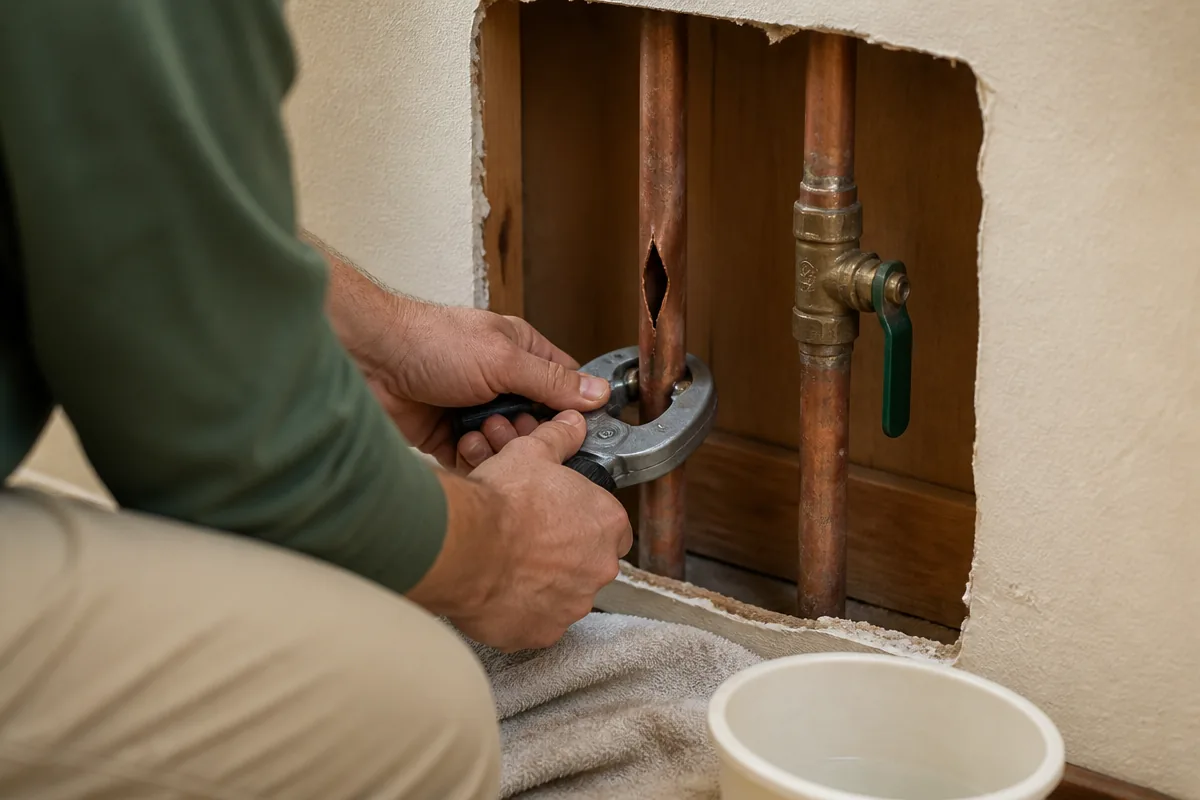
Pipes burst for a few reasons. Age and corrosion thin the metal, high pressure strains weak spots, and a hard freeze can expand water inside the line and crack it. Joints and fittings fail more often than the pipe body.
Frozen pipes are less common in the Phoenix area, but foothill nights occasionally dip near freezing. Exposed lines in attics, garages and outdoor walls are the most at risk.
The contractor first makes sure the water is off and checks the area for hazards. Then the break is located by opening the wall, ceiling or floor at the spot where water appears or where moisture readings point.
A short section is cut out and replaced with new pipe and fittings. If the pipe near the break is brittle or pitted, a longer section may be swapped so the repair does not fail next to the new joint.
Summer heat bakes attic and garage plumbing, and plastic fittings and old rubber hoses become brittle with time. Pipes in these spaces can fail without warning, often while no one is home.
If you spend part of the year elsewhere, close the main valve before leaving. A burst pipe in an empty house can run until a neighbor notices water at the door.
Emergency repairs vary because every break is different. These items usually explain the range.
Ask for the price and scope in plain words before work starts, including whether wall repair is part of it.
Rubber and clamp patches, putty and tape can slow a leak for an hour or two. None of them is a repair. Pressure and temperature swings push them off, and water keeps soaking the structure behind them.
If you use a patch to buy time, still close the main valve. Then ask the plumber how soon a permanent fix is possible.
Standing water should come out quickly. Mop or vacuum what you can, lift furniture off wet floors and run fans toward damp walls. Wet drywall and insulation hold moisture and may need to come out.
Photograph everything before you clean up, and keep receipts. Your insurer will ask for them. If the soaked area is large, read about water damage restoration, which has its own phone line.
Pipes rarely fail without warning, even if the warning is easy to miss.
Close the main valve. Run the tap at the bottom floor until the pipes empty and pressure falls. Switch the water heater off as well, since its elements can burn out when the tank runs low.
If water is near outlets or the electrical panel, leave the breaker alone unless you can reach it dry, and call an electrician if you cannot. Move furniture and rugs out of the way.
Photograph the damage and the broken pipe before cleanup. A record helps with any claim. The water damage page covers drying and rebuild, and that work is its own job, apart from fixing the pipe.
Copper pipe can develop pinholes from the inside, and elbows and joints fail first. CPVC, a light-colored plastic, grows brittle with age and cracks near fittings. Both are repaired by cutting out the damaged section and fitting new pipe.
If a home has repeated failures, spot repairs may only delay the next one. A conversation about repiping is reasonable after the second or third break.
Tell the dispatcher what material you see and where the break is. Cost depends on the pipe, the access and how many fittings must be replaced, and the quote comes before work begins.
Dry the structure and rebuild it after a leak, a burst pipe or an appliance failure.
When patching stops holding, replace worn supply piping throughout the house.
Find where hidden water is escaping, whether it is behind a wall, under a floor or along the buried line.
Close the main water valve first. Cutting power to damp areas comes second, and only if you can reach the switch from dry footing. Then open a low tap to drain the pipes and phone a plumber.
Reimbursement for sudden water damage from a burst pipe is common, while the pipe repair itself may not be covered. Review your policy and report the loss quickly.
Not always. A single failure from a freeze or a bad fitting can be fixed locally. Repeated breaks or widespread corrosion suggest repiping may be the better choice.
As soon as the water is stopped and the leak is fixed. Wet materials can grow mold within a day or two, so speed matters.
Close the main valve, empty the lines through a low tap and turn the heater off. Then ring the 24/7 line.
A single break is often repaired by cutting in new pipe. If the system is old and failing in many places, replacement may be the better choice.
Corrosion thins the wall from the inside over years. Water chemistry and age both play a role, and one pinhole often means others are on the way.
The plumber repairs the pipe. Drying and rebuilding are a restoration job, covered on the water damage page, which has its own phone line.
A clamp or tape slows a leak for a short time. It is not a lasting repair, and the pipe should be replaced soon.
Close the main valve if possible and then phone the 24/7 line. A dispatcher then puts a contractor on the job for you.
Service area centered on Fountain Hills and nearby Maricopa County cities.