Slab Leak Detection & Repair
Pinpoint a leaking pressurized pipe in or under a concrete floor, then fix it.
The water bill climbed, a ceiling shows a stain with no pipe above it, or the meter keeps turning with every tap closed. Leak detection pinpoints where the water is going so that nobody has to cut into a wall on a guess. Water that is spreading is a reason to phone now and not wait for a daytime slot.
Describe the problem on the phone, and the dispatcher lines up a contractor for your address.
Begin at the meter. Close every tap, stop the ice maker and switch the irrigation controller to off. Then watch the low-flow indicator on the meter face. If it moves, water is leaving the system somewhere.
Next, rule out toilets. A worn flapper can lose a surprising amount of water without a sound. Add dye to each toilet tank and give it a quarter hour without flushing. Tinted water in the bowl means that toilet is losing water on its own.
A search works in stages instead of guesswork. A technician starts by closing the main and watching how pressure behaves, then shuts off branches in turn to learn which stretch of pipe is the one losing water.
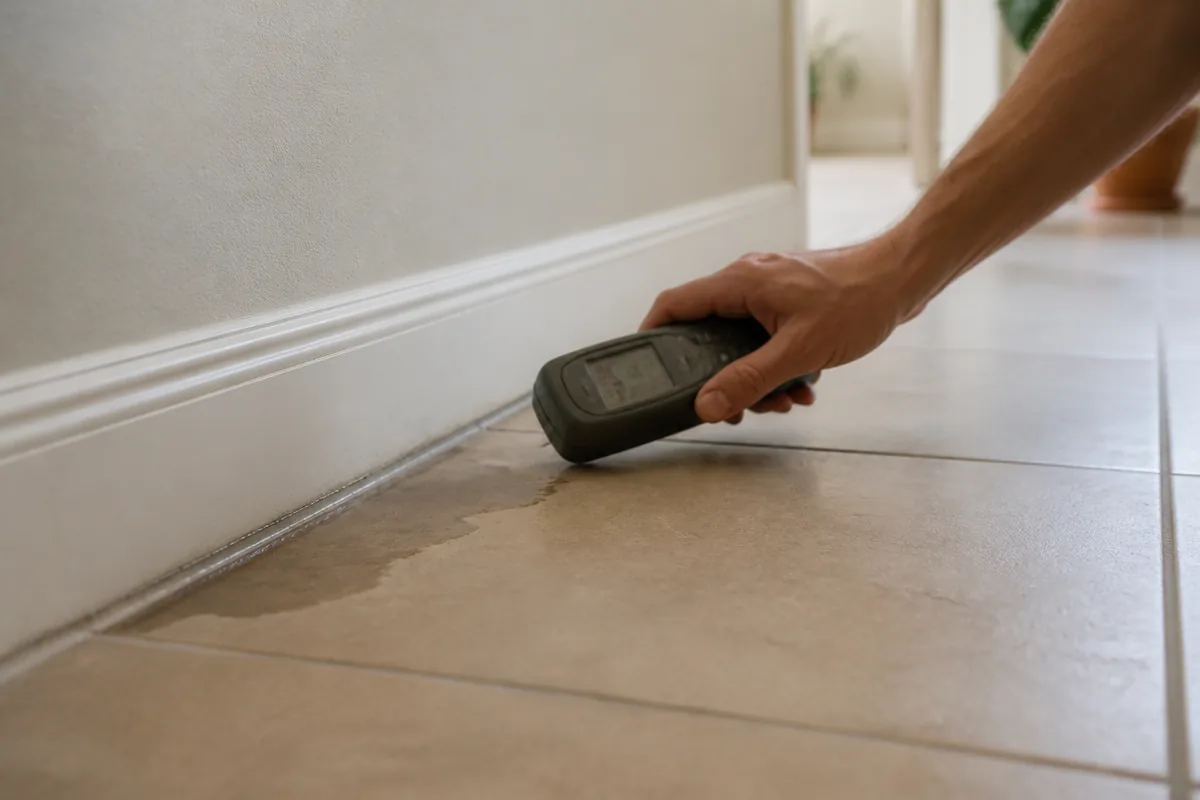
With that stretch identified, sensitive microphones can hear the hiss of water slipping out of a pressurized pipe. A thermal camera can reveal a cooler or warmer patch on a wall. A drain camera handles leaks in waste lines.
The 2020 census counted roughly 17 percent of Fountain Hills housing units as vacant, and seasonal homes are part of that figure. A small leak in a house nobody visits can run for weeks before anyone sees the meter.
If you winter elsewhere, read the meter when you leave and again when you return. A change with no one home is a strong sign that water is escaping, and it saves a long search later.
Pricing for a leak search usually follows the time and methods needed to locate the break, and the repair is quoted separately. These factors move the number.
Ask if the cost of the search is applied to the repair when one contractor handles both steps. Terms differ between companies, so have the answer written down.
Common spots are supply lines inside walls, fittings behind tubs, hoses at the washer and ice maker, the line to the water heater and the pipe under a slab. Outdoors, the irrigation system and the buried service line cause most of the rest.
Waste pipes fail differently from pressurized supply lines. A waste pipe drips only while water passes through it. So a stain that appears following a shower and fades by dinner time points to a drain line and not a supply line.
Expect the plumber to explain what was found, where it sits and what the repair involves. Some leaks end with a ten minute valve replacement. Others, such as a pinhole in a line under tile, take planning.
Ask who handles the access hole. Closing up drywall or tile is frequently a different trade, so learn beforehand what the quote includes.
These are the situations callers describe most often. Any one of them is worth a meter check.
Close every fixture, stop the ice maker and the irrigation timer, then read the meter and wait twenty minutes. Read it again. Movement means water is leaving the system somewhere between the meter and your fixtures.
Now shut the main valve where it enters the house and look at the dial again. A dial that keeps moving means the leak lies in the buried line ahead of that valve. A dial that stops means the loss is somewhere indoors. That single test tells the dispatcher which end of the property to examine first.
A running toilet is the most common false alarm. Add a few drops of dye to the tank water and wait without flushing. Color in the bowl proves the flapper is leaking and the problem is a small part. The toilet repair page covers that fix.
Contractors choose among several methods, and the mix depends on the pipe and the location. Listening tools pick up the sound of escaping water, thermal scanning shows warm or cool paths, and pressure tests show whether a section holds. A camera helps when the suspect is a drain. Ask the dispatcher which of these the crew carries instead of assuming.
Pinpointing is the goal of the visit. Many crews mark the floor or the ground so any opening stays small. Ask whether the crew marks the spot and can also repair what it finds, since some companies only locate. If a prior visit failed, say so on the call, because the next crew can start from what was already ruled out.
Pricing depends on access, pipe material and how much of the property needs testing, so the dispatcher can give a clear quote before work begins. Whether to repair, reroute or replace is the next question, and the water line page and the slab leak page walk through those options.
A ceiling stain rarely sits under the leak. Water travels along framing before it drips, so the wet spot and the break can be several feet apart. Photograph the stain, note when it first appeared and whether it grows after showers or after the irrigation runs.
Rental owners and managers of small buildings face another wrinkle. A single meter may feed several units, which hides the culprit. Closing one unit's supply valve at a time and watching the meter narrows the search before anyone opens a wall. Commercial plumbing covers larger properties.
Pinpoint a leaking pressurized pipe in or under a concrete floor, then fix it.
Fix, or renew, the underground water pipe that serves your house, starting at the meter.
Dry the structure and rebuild it after a leak, a burst pipe or an appliance failure.
Read the meter with all water use stopped. When the leak indicator spins, water is escaping. A bill that jumps, a musty smell and a warm floor patch are other signs.
Often it can. The plumber isolates a section, listens along its length, adds a thermal scan, and cuts open only the spot where water is escaping. Leaks that appear only under pressure take longer.
Treat it that way when water is spreading or collecting near outlets. Shut the main valve, then phone. A slow drip may hold for a day, yet damage builds with every hour it continues.
Coverage varies. Some policies pay to find a sudden leak, and plenty refuse to fund repairs on pipe that wore out naturally. Read your policy and talk to your insurer before work starts.
Yes. Phone the line, describe where water appears and how the meter behaves with every tap shut. Close the main valve first if it is within reach, then ask the contractor how soon a visit is possible.
Locating the leak is the point of the visit. Ask the dispatcher whether the crew marks the spot and whether the same crew repairs it, so you know the full path before booking.
Tell the dispatcher what was tested and what was ruled out. A second crew can skip repeated steps and try other methods, such as isolating sections or testing under pressure.
That boundary depends on the provider and the property, so ask EPCOR where its responsibility ends. The shutoff test described above shows which side of your main valve the loss is on.
When the main valve is reachable, shut it before dialing. Tell the dispatcher what is going on and you will hear what to do next.
Service area centered on Fountain Hills and nearby Maricopa County cities.