Hydro Jetting
Wash grease, scale and roots off the pipe wall when a cable only opens a narrow path.
A slow drain is a warning, and a stopped one is an interruption. Cleaning a drain removes the blockage and also looks for whatever keeps rebuilding it.
Name the fixtures that are affected, because that shows whether the clog is local or in the main line.
Start with how many drains are affected. A sink that drains slowly while the shower runs fine is a local problem. A toilet that gurgles while the washing machine empties points to the main line.
Pay attention to timing. A clog that returns every few weeks is usually grease, hair or wipes building on the pipe wall. One that appears suddenly can mean a foreign object or a break.
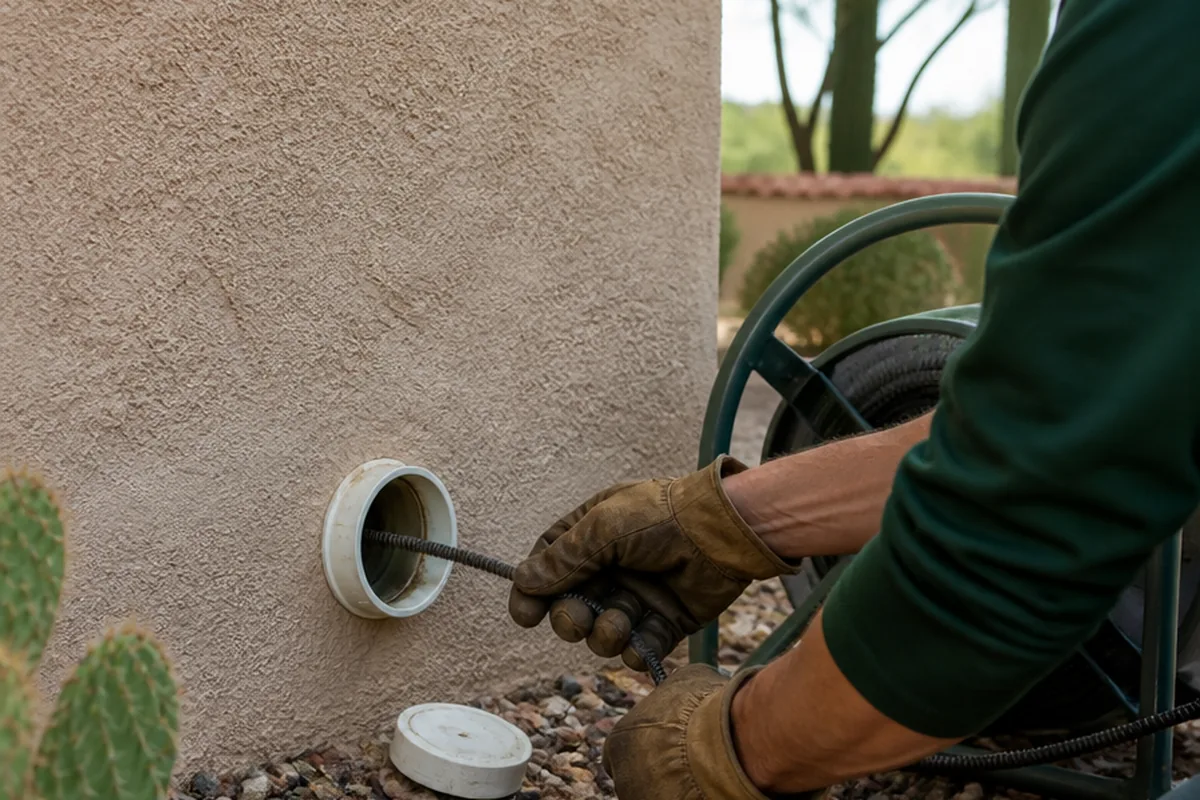
For a simple clog, a hand tool or a motorized cable breaks it up and pulls it free. For heavier buildup in a main line, a larger machine with a cutting head scrapes the pipe wall.
Afterward, running water through the line proves it is open. If the clog came back quickly in the past, a camera can show what is left on the pipe.
Drain clearing is commonly priced by fixture, or by how much pipe the crew clears. These factors change the total.
Ask whether a camera look is included, since it shows if the pipe is damaged.
The Fountain Hills Sanitary District lists wipes, paper towels, diapers, grease and cooking oil among the items that should never go down a drain. It warns that flushable wipes do not break down and can cause serious backups.
The District also says that the owner is responsible for the sewer line on private property. A plumber can clear your line first and then tell you whether the blockage is yours or in the street main.
Caustic openers can burn a hole through a stopped plug, but they sit in the pipe afterward and can damage fittings and hurt a plumber's skin. They also do little against hair or a toy.
If a chemical opener has been used, tell the plumber. They need to wear protection and may choose a different tool.
Keep grease out of the sink, catch hair with a strainer and put only toilet paper in the toilet. Wipes marketed as flushable stay intact far longer than paper.
A yearly cleaning helps lines that clog on a schedule. Ask about it if your kitchen line seems to clog every few months.
Describe how many fixtures are slow, whether the water backs up into a tub or floor drain, and how long it has been happening. Mention any recent work on the lines, such as a remodel or a new appliance. These details help the contractor decide between a cable, a jetter and a camera.
If you have a cleanout, tell them where it is and whether you can reach it. A clear route saves time on arrival.
Slow water is the early warning. These patterns tell you how far along the blockage is.
Grease, soap and food scraps cling to pipe walls and harden into a narrow channel. A sink that drains slowly after every wash, or backs into the laundry sink, usually has a buildup downstream of the trap. A cable breaks it up, and a jetting pass can scour what remains. The hydro jetting page explains when that is worth doing.
A tangle of hair and soap scum settles right under the drain opening. Lifting the stopper and pulling the hair clears many of these. When the water still stands after that, the blockage sits further along, and a cable is the next step.
A toilet that backs up along with a sink or tub is a main line signal, and plunging it only moves water around. Stop using water in the house and phone before the level reaches the rim.
A snake, also called a cable or auger, is a rotating steel line that bores through a blockage or hooks it. It suits hair, paper and soft obstructions. It cannot scrub the pipe wall, so grease can regrow quickly.
Jetting uses high pressure water to strip buildup from the inside of the pipe. It is the better pick for grease, scale and repeat clogs. A camera look afterward shows whether a bellied or cracked section is the real cause, and that is a camera inspection job.
Ask the dispatcher how far the cable reaches and whether a cleanout is available. A cleanout cap in the yard or garage gives the crew direct access to the main. Without one, the work may start at a roof vent or a fixture, which takes longer.
Cost depends on the length of line, the kind of blockage and the access point. You should hear a clear figure before work starts. If the same drain fails again within weeks, ask for the findings in writing and consider a camera view.
Wash grease, scale and roots off the pipe wall when a cable only opens a narrow path.
Use video from inside the sewer pipe to decide on a repair or to check a house before you buy it.
Mend a broken, sagging or root-packed sewer pipe, from a short patch to a longer run.
Repeat clogs usually come from grease, hair or wipes building on the pipe wall, or from a belly or crack in the line. A camera inspection shows which.
When several fixtures drain poorly together, or a toilet gurgles as another fixture runs, expect the main line to be part of it. One slow drain suggests a local problem.
You can, but tell the plumber if you do. These chemicals rarely fix hair or objects and can be dangerous to handle afterward.
Count it as urgent when sewage is entering the house or water is climbing in a tub or floor drain. Stop using water and call the line.
Both likely share one branch line. A blockage downstream of the junction forces water up the lowest opening. Clearing the branch, not the sink trap, fixes it.
A cable handles soft clogs such as hair and paper. Grease, scale and clogs that return call for jetting. A plumber can recommend one after feeling what the cable meets.
Yes. The line is open day and night. Stop using water, describe which fixtures are affected, and the dispatcher will explain how soon someone can come.
That points to the main line. Do not run the washer or flush. Call right away, since wastewater can overflow at the lowest drain in the house.
Cable length and clog type both matter. A camera inspection or jetting pass can reach what a cable cannot. Ask what the crew found at the end of the cable.
Stop using water, then call the 24/7 line. Say which fixtures are affected and what the water is doing.
Service area centered on Fountain Hills and nearby Maricopa County cities.