Water Heater Installation & Replacement
Replace a failing tank and choose the capacity, fuel and location of the next one.
Showers that stay cold, water pooling around the tank or a rumble coming from the unit. Repair starts with finding out which part has failed and whether it is worth fixing.
A leaking tank calls for closing its cold supply valve before you phone.
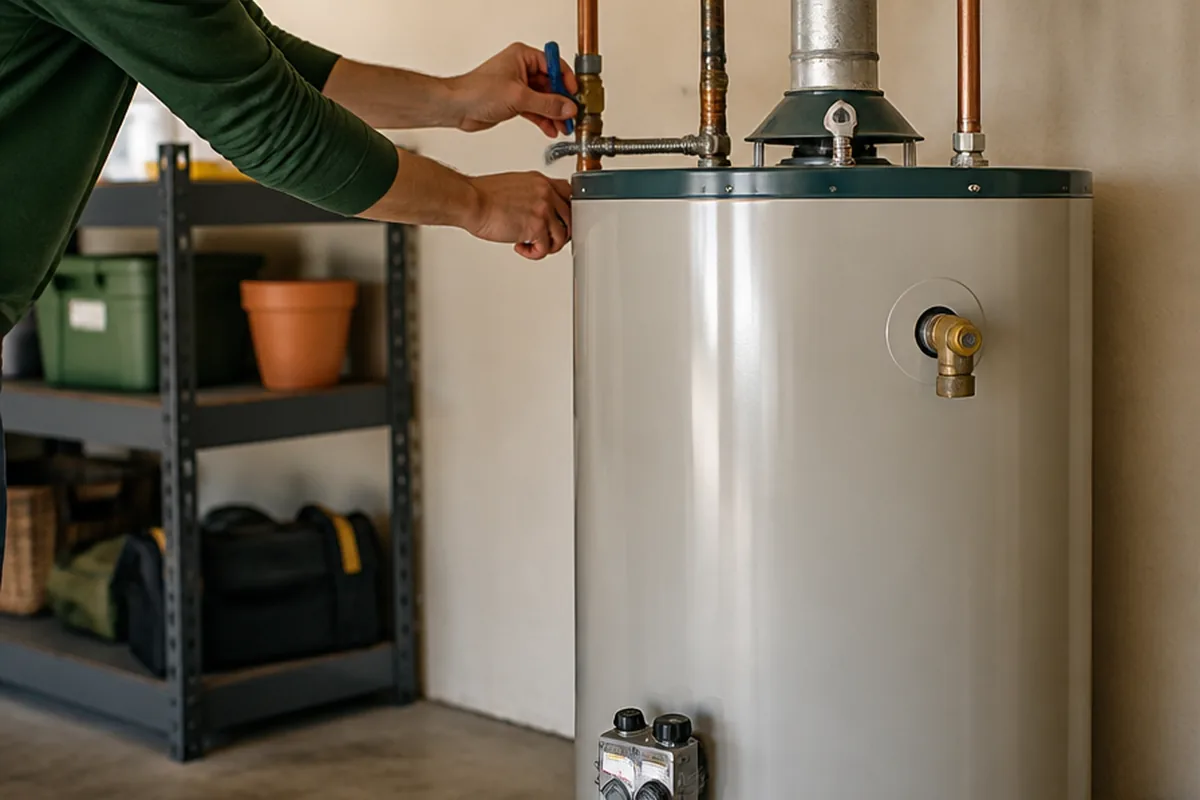
On an electric heater, the plumber checks the breaker, the reset button, the thermostats and the heating elements with a meter. On a gas heater, the checks include the pilot, the thermocouple and the gas control valve.
A tank that leaks from the shell is a different matter. Once water seeps through the steel, repair is rarely possible, and replacement is the usual answer.
Age is the first clue. A tank heater commonly serves for eight to twelve years, so one nearing that age should get a replacement quote next to the repair estimate.
Ask what the repair costs compared with a new unit, and how long each one should last. A cheap fix on an old tank may buy only a few months.
Many Arizona heaters sit in garages where summer air can run very hot. Heat stresses wiring, gaskets and insulation, so an annual look at the unit helps.
EPCOR's public data summary lists Fountain Hills water as moderately hard, at about 5.3 grains per gallon. Minerals settle faster at higher water temperatures, so sediment is a common reason local heaters get noisy.
A heater repair can be minor or major. These are the factors that decide.
Have both the repair price and the replacement price quoted during one visit so they are easy to compare.
Minerals settle on the bottom of the tank and harden, which leads to popping sounds and slower recovery. A flush clears loose sediment, though baked-on scale may not come out.
Flushing a heater that has never been flushed can sometimes unseat deposits that were plugging small leaks. Ask your plumber about the risk on an older tank.
The temperature and pressure relief valve guards the tank against unsafe pressure. A valve that drips constantly, or a discharge pipe that runs often, signals a problem that needs attention.
On gas units, venting and combustion air are critical. A scorched draft hood or a smell of gas calls for immediate action, and the supply should be shut off until a plumber looks at it.
Note the age of the heater and the fuel it uses. Describe what changed before the trouble began, such as a power outage, a nearby repair or a change in water pressure. Mention any noises, smells or discolored water.
If you can safely read the model label and any status light codes, give them to the dispatcher. Those details speed up parts selection.
Notice these before the tank gives out.
When the tank is leaking, close the cold valve perched over it. That valve normally rides on the inlet pipe at the top. An electric unit needs its breaker switched off, while a gas model needs its control dial set to off.
Move stored items away from the tank. Lay down towels or a shallow pan if the leak is slow. Do not touch wiring while standing in water. A gas smell means walking outside first and phoning the utility from there.
Note the age on the data label, the fuel type and any error code on a status light. Those details help the crew bring the right parts.
A leak that starts at the top, at a pipe connection or the relief valve discharge, is often repairable. A leak from the tank seam or the base usually is not, because water has already worked through the steel. Dripping from the temperature and pressure valve can come from high household pressure and not a bad valve, so ask for a pressure reading.
A heater in the age range of a decade or more deserves a replacement quote next to the repair figure. Weigh the repair against the risk of another failure within the year. The replacement page explains what that visit includes, and the tankless page covers service for those units.
Cost depends on the part, the fuel and how the heater is installed. The dispatcher can quote before the crew starts, and same-day availability should be confirmed on the call, not assumed.
Replace a failing tank and choose the capacity, fuel and location of the next one.
Descale the heat exchanger, decode error messages and repair or replace on-demand units.
Install a softener, or revive an aging one, so hard water stops scaling your fixtures.
Sediment on the tank floor catches steam bubbles, which pop as they work free. Flushing can help, and heavy buildup may mean the tank is nearing the end of its life.
Consider the age, the type of failure and the repair cost. A tank leaking from the shell needs replacement, while a thermostat on a young unit is worth repairing.
Common causes are a failed lower element, a bad thermostat or a dip tube problem. A plumber can test each one.
Water can damage floors and walls, and electrical parts can be a shock hazard. Kill the power or gas, close off the cold supply and then make the call.
It can be a fitting, the drain valve or the tank itself. If the tank is the source, repair is rarely possible and replacement is the realistic answer.
For electric heaters, look at the breaker and the reset button. On a gas unit, confirm the pilot flame is burning. If both check out, suspect a bad element, thermostat or gas valve.
A flush often helps with loose sediment. Baked-on scale may stay. On an older tank, ask the plumber about the risk of disturbing deposits before flushing.
Not always. Rust only in hot water points toward the tank or the anode rod. Rust in cold water too points toward the pipes.
Often when parts are on the truck, but it depends on the fault and the crew's schedule. Confirm timing with the dispatcher when you call.
With a leaking tank, switch off the power or gas and the cold supply first, then phone the 24/7 line.
Service area centered on Fountain Hills and nearby Maricopa County cities.