Leak Detection
Find where hidden water is escaping, whether it is behind a wall, under a floor or along the buried line.
Repiping swaps the supply pipes inside the house for new ones. Repiping becomes sensible once leaks keep turning up in new locations and patching each one no longer pays.
Ask for a written scope that shows where pipe will run and which walls will open.
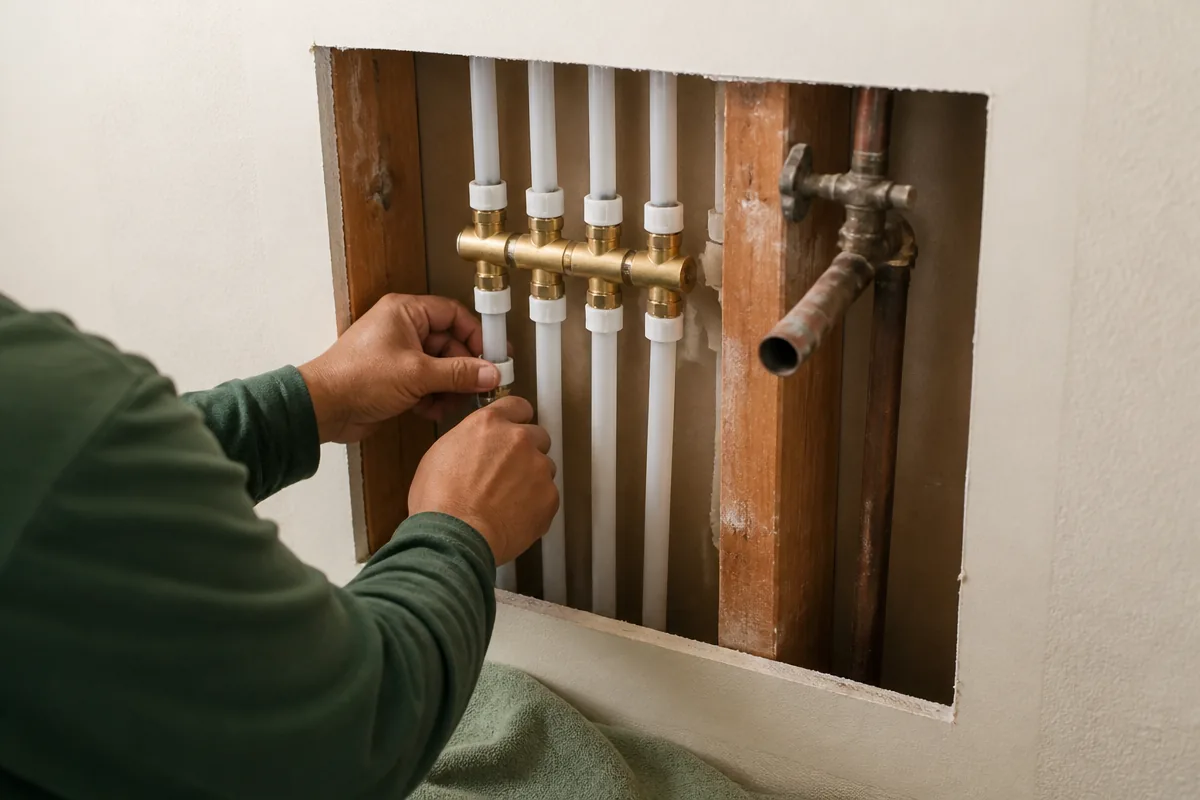
Repiping replaces the water supply lines that feed every sink, shower, toilet and appliance. It does not usually include the drain lines, which carry waste out of the house.
The new pipe is typically PEX or copper. PEX flexes around corners with fewer joints, whereas copper has decades of use behind it and tolerates heat well. Your contractor can explain which suits the house.
One leak in a sound system is a patch. Several leaks in a few years, or a leak in pipe that looks pitted along its whole length, point to failure across the system.
Some homes built in the late 1970s through the mid 1990s used polybutylene supply pipe, which is known for failing at fittings. A plumber can check whether yours is a candidate.
Whole-house pricing varies widely. These factors explain most of the differences between bids.
Compare bids by scope, not by total alone. A lower number that excludes patching may not be lower in the end.
Fountain Hills was established in 1970, so many homes have pipe that has carried hard water for decades. EPCOR is the supplier, and a public summary of its data lists about 5.3 grains per gallon.
Minerals build up inside pipe and clog aerators and valves. A softener helps protect new plumbing, so ask about water treatment when planning a repipe.
Water is shut off, new pipe is routed through the attic or wall cavities and old lines are disconnected. Next the fixtures are reconnected, and the whole system gets a pressure test while the walls are still open.
Most repipes take a few days for a typical house, though the timeline depends on size and access. Plan for periods without water, and ask when each one will happen.
Routing through the attic limits wall cuts, but some access holes are unavoidable. Agree in advance who patches and paints. Some contractors leave rough drywall repair to you.
Expect dust and noise. Cover furniture, clear closets that hold plumbing access and protect floors along the work path.
Partial repiping replaces only the worst section, such as a slab-bound line. It costs less, though other sections of old pipe remain.
Coatings are sometimes offered for drain pipe, rarely for supply pipe. Ask what a method has done in homes like yours before agreeing to it.
A pattern of problems is the clue.
One leak is a repair. Two or three in a year suggest the system is wearing out. Cutting in new sections can work for a while, but each opening costs money and floor or wall repair.
A repipe replaces most of the supply pipe in one project. It ends the cycle and restores pressure, though it is the largest option. Compare it with a spot repair using the plumber's quote.
Galvanized steel and old polybutylene are common candidates. Ask what is in your house. A plumber can identify the material at an exposed section.
Crews cut small access holes in walls, run new pipe, test it and patch the openings. Water is off for a period during the work. Ask how long and whether a temporary supply is available.
Trenchless methods apply to the buried line, not the pipes in the walls. The water line page covers that option.
Cost depends on house size, access and pipe material, and a written quote should come before work.
Find where hidden water is escaping, whether it is behind a wall, under a floor or along the buried line.
Pinpoint a leaking pressurized pipe in or under a concrete floor, then fix it.
Shut off the water, then fix the cracked or split length of pipe.
The main warning signs are repeated pinhole leaks, discolored water, weak flow throughout the house and pipe types with a bad record, polybutylene among them. An inspection by a plumber will give you a professional opinion.
A typical house takes a few days, though size and access change the timeline. Ask for a schedule that shows when the water will be off.
Some openings are needed, but routing through the attic and closets limits them. Ask how many access holes to expect and who repairs them.
Both work well. PEX is flexible and quick to install, and copper is traditional and durable. Ask your contractor which they recommend for your house and why.
Planned repiping is scheduled ahead, but a failing line that is flooding the house is a night or weekend call. Close the main valve, then phone the line and say what happened.
Repeated leaks, rusty water and low pressure together point to it. One leak alone usually does not.
Duration varies with square footage and how easily the walls open. Request a schedule along with the quote.
Crews use small openings and patch them. The amount of patching depends on how the pipes run.
It is steel coated with zinc. The coating wears, the inside rusts and flow drops. Replacement is the usual fix.
Yes. A partial repipe, such as one bathroom branch, can make sense when only part of the system is failing.
Call and describe the history of leaks. The dispatcher can arrange a contractor who will look over the entire system.
Service area centered on Fountain Hills and nearby Maricopa County cities.