Burst Pipe Repair
Shut off the water, then fix the cracked or split length of pipe.
Wet building materials begin to deteriorate within hours, and mold can start in a day or two. Restoration is its own job, apart from the pipe repair: the water has to be stopped, extracted and dried out of the structure, and what it ruined has to be rebuilt.
Water damage goes to a dedicated restoration number, shown on this page.
Deal with the source first when it is safe. A leaking pipe means closing the main water valve. After a storm, keep out of standing water while power is on, and let the utility, or a switch you can reach while standing dry, cut the electricity.
Photograph everything before you move it. Note when the water started, what it touched and what you did. Your insurer will ask for this record.
The trade standard for this work, IICRC S500, ranks water by how contaminated it is. A broken supply line releases clean water. Gray water, such as a washing machine overflow, brings some contamination along.
Black water includes sewage and flood water. It calls for protective gear and removal of porous materials. Do not try to handle it yourself.
Pricing follows how large the loss is and which category of water caused it, and an insurer is frequently part of the picture.
Request the scope in writing. When a claim is open, check if the contractor can speak with your insurance adjuster.
Summer monsoon storms in the Arizona high desert bring heavy rain and flash runoff. Water can enter through roofs, windows and garage doors, and soak flooring quickly.
The air is usually dry, which helps drying, but wet drywall and insulation still hold water. A home left shut up for part of the year can hide a slow leak, so check the meter when you return.
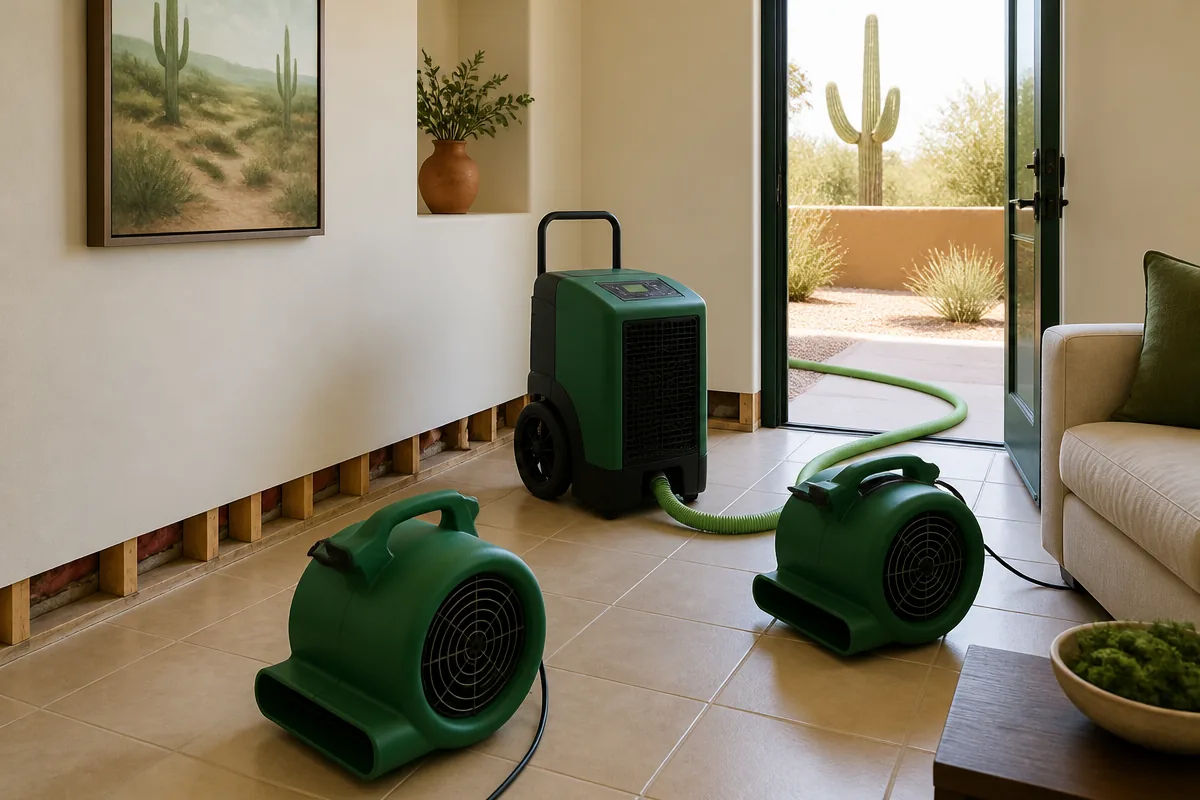
Crews pump out standing water and then set up air movers and dehumidifiers to draw moisture from the building. Moisture meters on walls and floors give a daily reading, and the equipment stays until the materials reach their dry target.
Wet carpet pad usually comes out, and some drywall needs to be cut away. Hardwood and cabinets may be dried in place if they are caught early.
According to the EPA, mold can begin to grow on wet materials after one or two days, which makes fast drying your best protection. Mold that has already appeared calls for a conversation about containment and removal.
After drying, the rebuild replaces drywall, insulation, trim and flooring. Some companies handle both the drying and the rebuild, while others hand off to a contractor.
Tell your insurer about the loss promptly and ask which documents they want. Save receipts for emergency measures, and hold on to damaged items until the adjuster has seen them.
Ask the restoration company for a written scope and moisture logs. These help your claim and show that drying met the standard.
Water damage shows itself in many ways, and not all of them look like a flood.
Stop the source first. If a pipe or heater is the cause, close the main valve. If water is entering from outside, note where. Cut power to wet rooms only if the panel is reachable from a dry spot.
Lift small items out of the water and move furniture onto blocks or foil. Pull up wet rugs. Photograph every damaged area before anything is moved, since a record helps an insurance claim.
Do not run a household vacuum on water, and stay away from sagging ceilings. A ceiling holding water can fail without warning.
If a pipe is the culprit, the burst pipe page covers the repair, which is a different crew's job from the drying.
The first visit is about finding out how far the water went. A crew checks for moisture in walls, floors and ceilings, and notes the source and the type of water. That scope decides what must be removed and what can be dried in place.
Callers often ask how much notice is needed. Say what is happening and ask the dispatcher about timing, since it depends on the contractor's schedule. Pricing depends on the area affected, the materials and the type of water, and a clear figure should come before work begins.
Tell the dispatcher if the damage came from a past leak. An older, slow leak is assessed differently from a sudden flood.
Mold can take hold quickly in soaked materials, and the EPA guide to mold and moisture urges drying within one to two days. Damp drywall, insulation and carpet pad are the likeliest starting points.
Callers often want testing, removal or both. Ask whether the contractor handles mold work and what testing or clearance steps are included. If a home sale is pending and a lender requires documentation, ask what paperwork the contractor can provide.
Small spots on a bathroom wall are common. A large area, a musty room or recurring dampness is a reason to call.
Scope varies, so confirm what the contractor covers before you rely on it.
Water that enters from outside, through a foundation or under a door, may carry soil and contaminants. Treat it as unsafe to handle without protection. Pumping water from a yard or a pool deck is exterior work, which is not what this page covers.
Raised foundations can hold water unseen. A damp smell or a puddle under the floor needs a look from below, and the plumber's leak search may be needed to find a supply line.
A sewer backup is not clean water. Stay out, keep children and pets away and phone. The sewer line page covers the plumbing fix.
Shut off the water, then fix the cracked or split length of pipe.
Find where hidden water is escaping, whether it is behind a wall, under a floor or along the buried line.
Diagnose cold showers, a dripping tank, a rumbling heater, or a pilot or element fault.
Right away. Mold can take hold on wet materials within a day or two.
If a pipe or appliance was the source, then yes. Drying the building falls to the restoration crew, and fixing the cause falls to a plumber.
Sewage and other contaminants may be in it. Keep clear and let professionals handle the cleanup.
Plenty of homeowner policies pay for sudden water damage, while flood damage usually needs its own flood policy. Check your policy and ask your insurer.
The restoration number on this page is meant to be answered at any hour. When it is safe to do so, cut off the water source before you phone.
Equipment rental is not offered through this page. Ask the dispatcher about drying services that include the equipment.
Ask the dispatcher what the contractor covers for your situation, including testing and clearance steps. Scope depends on the extent of growth.
Tell the dispatcher about the sale and ask what documentation the contractor provides. Share the lender's requirements so scope is clear.
Exterior pumping is not covered by this service. The dispatcher can say what is available for water inside the home.
Phone the restoration line and say where the water came from and about how much of it there is.
Service area centered on Fountain Hills and nearby Maricopa County cities.