Leak Detection
Find where hidden water is escaping, whether it is behind a wall, under a floor or along the buried line.
Desert pools lose water to the sun every day, so telling evaporation from a leak takes a few simple tests. When the numbers say leak, the next job is finding where it escapes.
Do a bucket test first, and keep the pump running or off as the plumber advises.
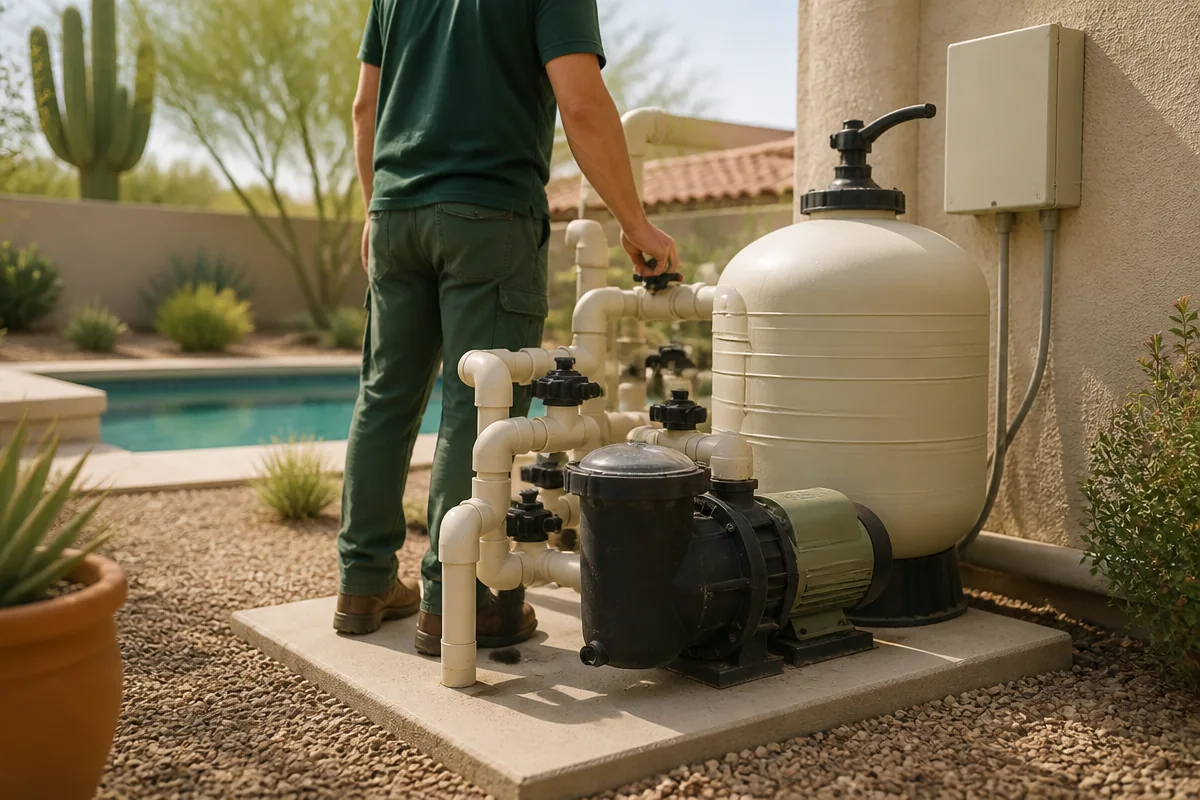
Heat, wind and low humidity pull water out of a pool every day, and a spa loses it faster. A loss that matches what neighbors with similar pools see is probably normal.
The bucket test gives a better answer. Set a bucket of pool water on a step, mark the level inside and outside, and compare after a day. A pool that falls further than the bucket has probably got a leak.
Run the pump for a day, then turn it off for a day and compare losses. If the level drops more slowly with the pump idle, the trouble is probably in piping that carries pressure, such as return lines or fittings where the equipment sits.
A loss that does not change with the pump off suggests the shell, the skimmer, the light niche or a fitting set into the wall.
The Fountain Hills Sanitary District asks residents to call before draining a pool, because some areas have restrictions. Plan ahead if a repair needs the water level lowered.
Sun and heat also stress equipment pads, and exposed PVC can turn brittle. A small crack at a union is a common source of a loss that never shows on the surface.
Pool leak searches vary with the type of leak and the amount of testing needed. These factors matter most.
Ask for the testing fee and the repair price separately, and find out whether pool service or plumbing covers each step.
Pressure testing isolates lines one at a time. Acoustic equipment hears water as it escapes. Dye testing near suspected cracks shows the water being pulled out of the shell.
Equipment varies by contractor, so ask what they plan to use. An honest answer ties the tool to the type of leak you most likely have.
Fittings and valves at the pad are among the easier repairs. Leaks in buried lines may need trenching or rerouting, and shell cracks call for patching or resurfacing.
Ask whether a repair carries any written warranty. Pool work often sits on the edge between plumbing and pool service, so find out who handles each part.
Callers ask about pools, spas and remodeled spas. A level that falls faster than evaporation is the usual clue. The bucket test described in the guides separates evaporation from a leak.
The plumber looks at the equipment pad, valves and lines. Shell and plaster leaks may need a pool specialist. Say what you have when you call.
Find where hidden water is escaping, whether it is behind a wall, under a floor or along the buried line.
Check the device that keeps irrigation water from flowing backward into drinking water.
Fix, or renew, the underground water pipe that serves your house, starting at the meter.
It depends on heat, wind and surface area. Compare your loss with a bucket on a pool step. When the pool sinks beyond the bucket level, suspect a leak.
Usually yes. Pressure tests, listening gear and dye tests work with water in the pool, and draining is a last resort.
Mostly, yes. Spas have more plumbing in a smaller space, so jets, unions and the heater are common culprits.
It depends on the source. Underground lines and fittings are plumbing, while shell cracks often go to a pool specialist. Ask the contractor which part they cover.
Yes. If the water level is falling fast or the equipment pad is leaking, call right away. Switch the pump off if the level reaches the skimmer opening.
Ask when you call and describe the unit. Equipment and plumbing leaks are different from shell leaks.
Shell and plaster repair is a pool trade. The plumber handles pipes, valves and equipment connections.
Call and describe the loss and what you have already tested. The dispatcher can suggest what to do next.
Service area centered on Fountain Hills and nearby Maricopa County cities.