Leak Detection
Find where hidden water is escaping, whether it is behind a wall, under a floor or along the buried line.
Think of the water line as the pipe underground connecting meter and house. When it leaks or corrodes, pressure drops, the yard turns soggy or the bill rises with no explanation. Water welling up in the yard, or pressure that suddenly drops, deserves a prompt call.
Tell the dispatcher where water surfaces or where the pressure fell, and ask about trenching versus trenchless.
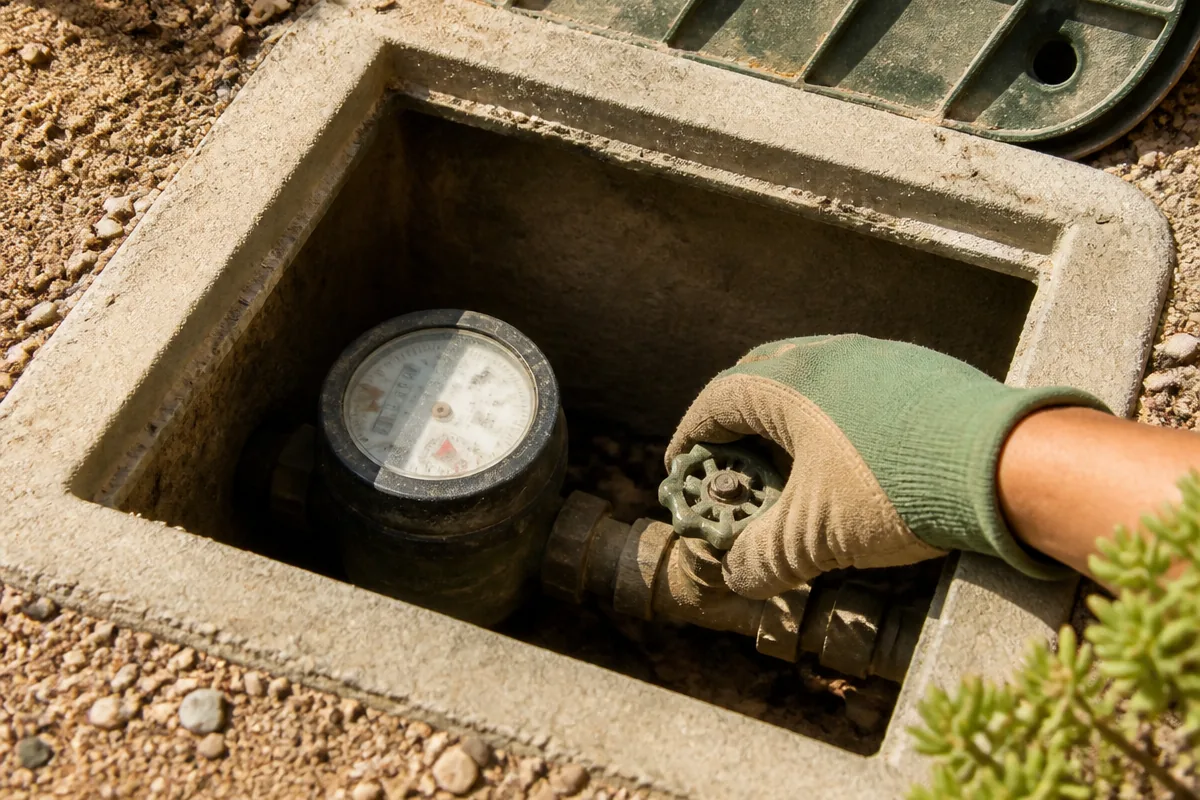
Water enters the property at the meter, then travels through a service pipe to the house. In many places the utility owns the pipe up to the meter and the owner owns the pipe beyond it. Check with the utility about where its responsibility ends before paying for any excavation.
The pipe may be copper, plastic or older galvanized steel. Material affects how it fails, and it also decides which repair options are practical.
A plumber closes the valve at the house and watches the meter. When the dial continues to turn, the leak lies in the length between the meter and that valve. Pressure testing narrows the zone further.
Surface clues help too. A lush strip of grass over the pipe route, a wet patch near the meter box or a dip in the driveway edge all hint at where to start.
Elevation changes across Fountain Hills, and pressure can differ between nearby streets. A pressure reducing valve near the main protects fixtures, and a failing valve can look like a service line problem.
Ask the plumber to read the pressure at a hose bib before any digging begins. A reading that is far too high or too low points at the valve, which costs much less to fix than a buried pipe.
Cost depends on distance, depth and what sits on top of the route. These are the biggest drivers.
Ask who handles permits, how the yard will be restored and how long the water stays off.
One failure in an otherwise healthy pipe can be fixed by splicing in a short section. If the pipe is corroded along its length or has leaked more than once, replacing the run is usually the better value.
A new line goes in either by open trench along the route or by trenchless methods that draw the pipe through the old path. The right choice depends on what sits above the pipe.
Utility locates must happen before any digging. Arizona runs a call-before-you-dig service, and the contractor normally arranges it. Mark sprinkler lines you know about so they are not clipped.
Plan on the water being off for some hours. Fill a few containers beforehand, and ask when service returns so you can plan laundry and showers.
The water line runs underground, so the evidence appears at the surface or on the bill.
Find the main shutoff at the house and the utility valve at the meter. Close the house valve and check whether the dial stops. Photograph the meter reading and the wet area with the time.
Keep vehicles, pets and children off soft ground, which can collapse over a washed-out trench. Do not dig yourself, because other utility lines may run nearby. Arizona 811 marks public utilities before excavation, and your plumber should arrange it.
If water is flowing across a driveway or into a garage, phone right away and say so.
Weak flow in every tap points at the supply and not a fixture. Three usual suspects are a line leak, a main valve left partly shut and a regulator on its way out. The plumber measures pressure at a hose bib to separate them.
A restricted old pipe, such as steel that has scaled inside, is another cause. Replacement is the usual fix, and the repiping page covers the in-house side.
A full walk through of weak flow and dry taps lives on the low water pressure page, and a pressure test is usually the first step.
A hose bib that drips behind its handle, or a pipe feeding it that wets the wall, is a small repair. A leak in the yard line feeding irrigation is separate. Irrigation systems are not a listed service, but the plumber can check the point where they tie into the house supply, and backflow testing covers the device there.
Find where hidden water is escaping, whether it is behind a wall, under a floor or along the buried line.
Shut off the water, then fix the cracked or split length of pipe.
When patching stops holding, replace worn supply piping throughout the house.
As a rule, the property owner maintains everything on the house side of the meter. Your water utility can confirm exactly where its responsibility ends before you pay for a repair.
A short run can be finished in a day, and longer or deeper routes take more. Ask the contractor for a time frame and how long the water will be off.
Often yes, using trenchless methods. They need access points at both ends and work best when the old route is clear, so ask whether your lot qualifies.
A worn pressure regulator, a valve that is only partly open or a leak in the service line could each be the reason. A pressure reading at a hose bib helps tell them apart.
Call the 24/7 line. Report where the water is coming up, and whether the taps still have some pressure. Close the shutoff at the house or the meter, and ask the contractor what will happen first.
Shut the house main and watch the dial. If the dial keeps spinning, the loss sits between the meter and that valve, so the service line is suspect.
Often not. Locating the break first limits the trench. Some jobs can use a shorter cut or a replacement path chosen to avoid hardscape.
Marking buried utilities is a standard step before excavation. Ask the dispatcher how the crew handles it for your address.
Yes, a break upstream of the house lowers pressure. A regulator problem or a partly closed valve can look similar, so a pressure reading helps.
If it has its own valve inside, yes. Otherwise the main is closed for the repair.
Close the main valve at the house if you can, then call. Say where the water shows up and how your pressure looks.
Service area centered on Fountain Hills and nearby Maricopa County cities.