Toilet Repair & Installation
Fix running, leaking and clogging toilets, replace them, or add a bidet seat.
A new shower or tub changes a bathroom, but the quality of the plumbing behind the tile decides how long it lasts. The valve, the drain and the waterproofing all deserve attention.
Ask how the contractor will handle waterproofing and testing before tile goes up.
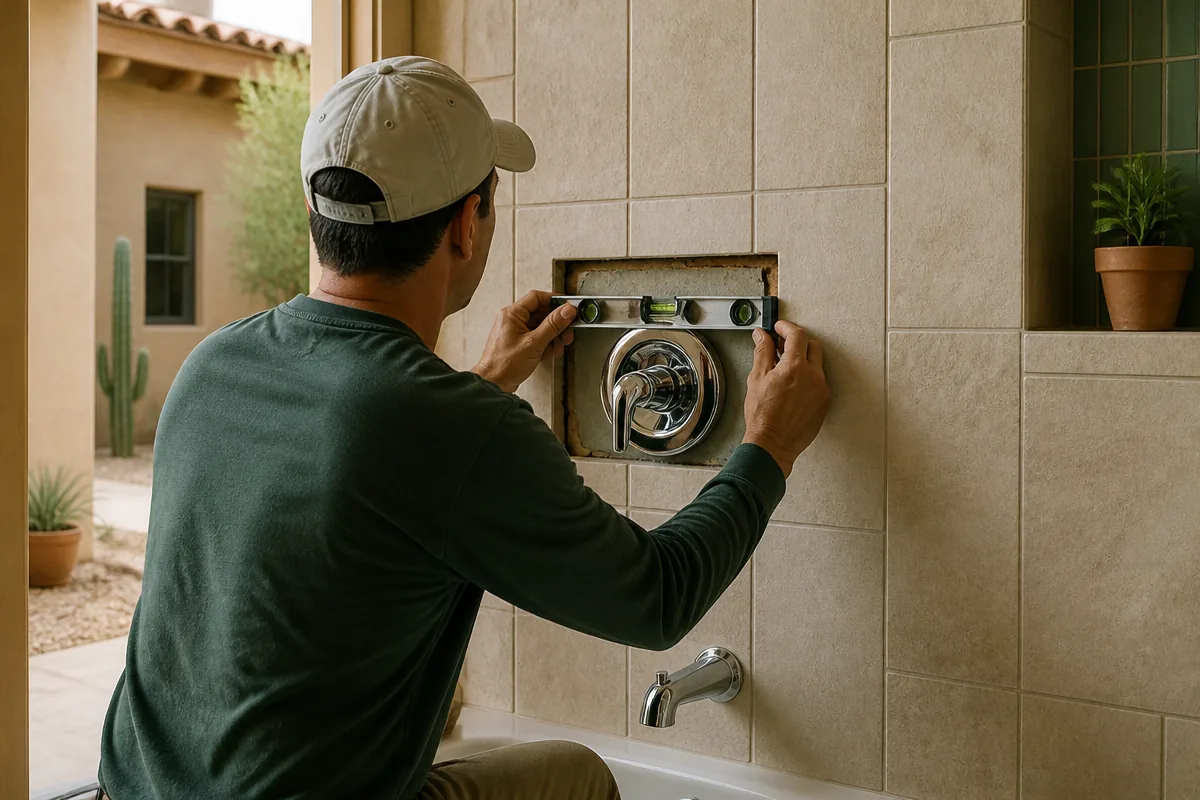
A valve inside the wall sets both temperature and flow. When it is worn, or fails to fit the new trim, swap it while the wall is already open.
Pressure-balancing and thermostatic valves guard against sudden temperature swings when another fixture is used. Ask which type is being installed.
Showers need a drain at the correct height and slope. A shower pan or membrane under the tile keeps water from reaching the framing. A flood test, holding water in the pan for a period before tile, shows whether it holds.
Tub drains involve an overflow assembly and a trap. A slow leak at the drain connection can go unnoticed until the ceiling below stains.
Hard water leaves spots on glass and finishes. A public summary of EPCOR data lists Fountain Hills water at about 5.3 grains per gallon, so choose fixtures with finishes that tolerate mineral deposits.
Easy-clean shower heads with rubber nozzles help. A softener reduces how often descaling is needed.
Bathroom projects range widely. These elements move the price most.
Ask for a written scope that separates plumbing from tile and finish work.
Converting a tub to a walk-in shower is popular for accessibility. It involves moving the drain and building a pan, so it costs more than a simple fixture swap.
Plan for the threshold and the clear opening width. A curbless design needs careful floor framing.
Every fixture needs a vent so the trap does not lose its seal. Moved fixtures may need a new vent path. Local code spells out size and distance.
Pressure testing the supply lines and flooding the drain before tile saves a lot of heartache. Ask to see the test.
A shower remodel is the moment to look at what is behind the wall. A corroded valve body, an old galvanized stub or a drain that sits at the wrong height all cost less to fix while the wall is open. Ask the contractor to photograph the framing and the pipes before the new surround goes in.
Drain location decides whether a new pan or tub fits. A tub swap that keeps the same footprint is straightforward, while moving a drain means cutting the floor. Tell the dispatcher what you are planning, which lets the contractor load the correct parts.
A rain head or a set of body sprays can draw far more water than a standard shower, and your heater and supply line have to keep up. Ask the contractor to add the flow rates of every outlet, then compare the total with what your water heater can deliver.
Check local rules on flow limits for new fixtures, and ask whether the valve you choose will accept trim that you like. Matching them in advance prevents a delay when the trim arrives.
These are common reasons for a visit.
Changing a shower valve means opening the wall from the tile side or the back. Plan for tile repair. A plumber can tell you what is needed before work starts.
If a pipe was cross-threaded or a joint leaks at the wall, the fix may be small, though access drives the price.
Fix running, leaking and clogging toilets, replace them, or add a bidet seat.
Stop drips and weak flow, free stuck valves and repair leaking outdoor hose bibs.
Find where hidden water is escaping, whether it is behind a wall, under a floor or along the buried line.
Sometimes, through an access panel on the other side of the wall. Otherwise tile must come off. A plumber checks what is behind the wall.
A simple swap may take a day, while a full remodel with a new pan and tile takes longer.
It confirms the pan or membrane holds water before tile covers it. A leak found early is cheap to fix.
Yes. It involves moving the drain and building a pan, so ask the contractor for details and a permit.
The line is open around the clock. Close the shower's supply or the main valve if water is escaping, then call. Planned replacements are scheduled by day.
Yes. It requires wall access, and the plumber can explain tile repair first.
A slow leak from the drain, valve or pan can seep downward. A leak search finds it.
Installation is the purpose of this page. Give the fixture type and the layout when you call.
Call and describe what you want to change. A dispatcher will help you reach a contractor.
Service area centered on Fountain Hills and nearby Maricopa County cities.