Toilet Repair & Installation
Fix running, leaking and clogging toilets, replace them, or add a bidet seat.
A dripping tap wastes water, and a shutoff valve that fails can turn a minor leak into a soaked cabinet. Most sink problems come from worn cartridges, clogged aerators or old supply lines. When a faucet will not close or a cabinet is filling with water, shut the angle valve first.
Close the angle valve under the sink to stop a leak, then call.
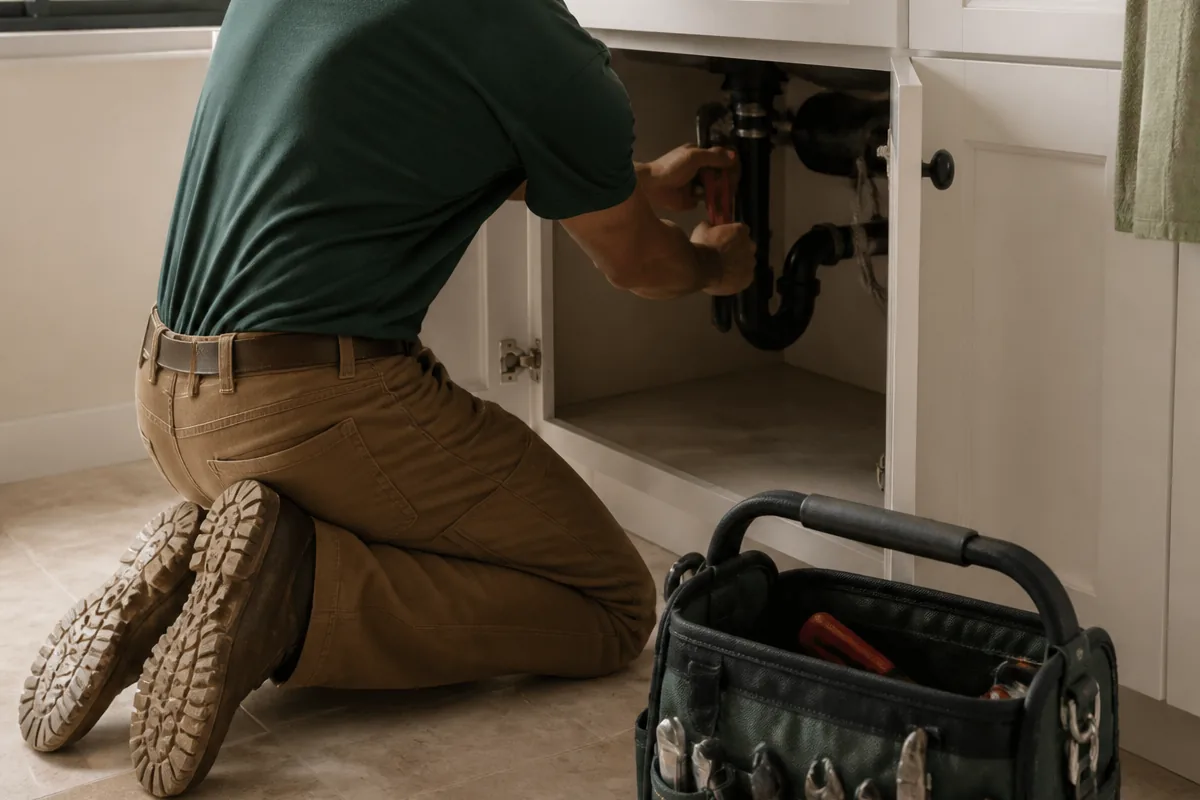
Most faucets use a cartridge or ceramic disc that wears out over time. A drip from the spout points to the cartridge, while a leak around the handle may mean a worn seal.
Repair is often a matter of replacing that cartridge. If the faucet body is corroded or the finish is damaged, replacing the faucet may cost about the same as a repair.
Check whether the problem affects one tap or the whole house. If only one faucet is weak, the aerator is the likely cause. Unscrew it and rinse out any grit.
If many fixtures are weak, the cause may be a pressure regulator or a valve. A pressure reading at a hose bib helps narrow it down.
Minerals in hard water build up inside aerators and around cartridges. A public summary of EPCOR data lists Fountain Hills water at about 5.3 grains per gallon, which is enough to clog small openings over time.
Soak aerators in vinegar every few months, and replace cartridges when they start to stick. A softener reduces how often this is needed.
Faucet work ranges from a simple part swap to a full replacement. These factors decide.
Check if the quote covers fresh supply lines and angle stops.
Look at the angle stops, supply lines and drain trap. Braided lines wear out after years, and old chrome valves can seize or drip when turned.
Replacing the supply lines and stops during a faucet swap is inexpensive and prevents later leaks. Ask your plumber to check them.
Drips behind a hose bib handle usually call for a new packing nut or washer. Leaking inside the wall is the more serious case, and it appears as a damp patch on the interior surface.
Occasional frost in the foothills can split an exposed spigot. Insulated covers cost little and are worth putting on in winter.
Note whether the faucet has one handle or two, and whether the leak comes from the spout, the base or the handle. Take a photo of any brand name on the body. If you plan to replace the faucet, measure the number of holes in the sink or counter, since the new fixture has to match.
Look under the sink for dampness and for the shutoff valves on each supply line. If those valves are corroded or will not close, say so when you call, because replacing them is often part of the job.
Match your symptom to the likely cause before the visit.
Beneath each sink and behind each toilet sits a small shutoff known as an angle stop. It lets you isolate one fixture, and it is the first thing you reach for in an emergency. These valves seize with age, and forcing one can crack the stem and start a leak.
If a valve will not turn, leave it. A plumber can swap in a quarter-turn model, which closes fully with a short twist. Having that done before a failure costs less than a flooded cabinet. Closing the main valve is the fallback, and the shutoff steps are the same as on the burst pipe page.
A tub spout that drips or a showerhead that sprays sideways is often a worn diverter or a scaled head. Water behind a shower wall is different. If a stain appears on the other side, or the floor stays damp, the valve body or a joint inside the wall may be leaking. That needs a plumber to open the access panel.
Laundry sink and washing machine valves fail too. A drip from the hose bib behind the washer usually means a worn stem or a cracked fitting. Replacing the valve and the hoses together prevents a repeat.
Bring the brand or a photo of the fixture. Premium faucets use proprietary parts, and having the model ready lets the plumber arrive with the right cartridge. Pricing varies with the part and how hard the valve is to reach, and the dispatcher can quote before work starts. If the fixture is beyond repair, the shower and tub page covers replacement.
Fix running, leaking and clogging toilets, replace them, or add a bidet seat.
Is the disposal jammed or leaking? It can be freed, repaired or swapped for a new one.
Whole-house and under-sink filters for taste, odor and sediment.
Usually a cartridge, washer or seat has worn out. The plumber replaces the part, or the faucet if it is too worn.
The aerator is often clogged with mineral grit. Unscrew it and rinse it out, and call if the flow is still weak.
Forcing it risks breaking it. A seized stop can break and flood the cabinet. A plumber can replace the valve safely.
Often yes, with a new washer or packing. A leak inside the wall needs a closer look, so call if you see moisture indoors.
It can. Water continues to run into the cabinet or over the floor. Before you phone, shut off water at the angle valve beneath the sink or at the main. A worn cartridge is a frequent cause.
A repair fits a good fixture with a worn cartridge. Replacement makes sense when the body is corroded, parts are no longer made or the finish is failing.
Leave it alone and close the main valve instead, then call. A plumber can fit a new quarter-turn valve, which lets you isolate the fixture next time.
Often yes, if parts exist. Mention the make and model to the dispatcher, who can have parts checked before the visit.
Check the supply lines, the angle stops and the drain trap. A drip that only happens when water runs usually comes from the drain side.
Yes. A steady drip wastes water, stains the basin and can wear the seat until the repair costs more. It is usually a quick part swap.
Turn off the valve beneath the sink, ring the 24/7 line and say what you are looking at.
Service area centered on Fountain Hills and nearby Maricopa County cities.