Drain Cleaning & Unclogging
Unblock a backed-up sink, tub, laundry or main drain and trace what caused the clog.
Business plumbing differs from residential work. Larger systems, shared lines and the need to stay open all raise the stakes, so planning and response time matter.
Give the dispatcher the kind of business, how many units are involved and where the trouble is.
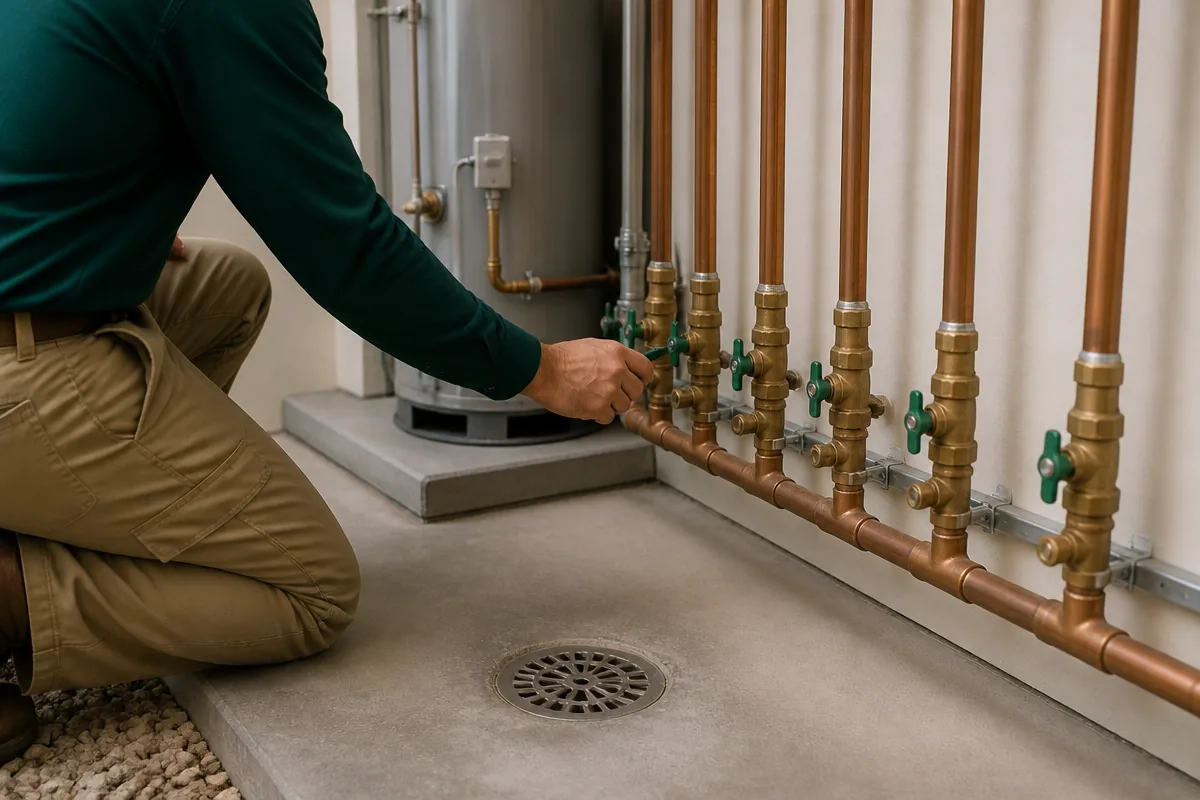
Commercial buildings have bigger pipes, more fixtures and shared lines. A stoppage in a main line can affect several tenants at once, and a leak can flood neighboring suites.
Many jobs involve coordination with a landlord, a property manager or an association. Tell the dispatcher who has authority to approve work.
Restaurants and cafes see grease-related drain issues. Offices and retail spaces see restroom clogs and slow floor drains. Salons and clinics have sinks and sanitary fixtures under heavy use.
A camera inspection helps find the point where a shared line is failing, which matters when more than one tenant is affected.
The building and the scope of work set the price of a commercial job. These factors drive the cost.
Ask who is billed, the tenant or the owner, before work begins.
Fountain Hills has retail centers, offices, restaurants and professional suites, and many tenants share lines. The Fountain Hills Sanitary District says it serves all properties in town, and fees apply regardless of occupancy.
Landlord and tenant responsibilities vary by lease. Read yours before calling, and tell the dispatcher who owns the building.
Ask whether the contractor can arrange work so restrooms or water stay usable during the job. Temporary shutoffs can be timed for before or after business hours.
Document the problem with photos and notes. Insurers and landlords often ask for a record of what happened and when.
Preventive cleaning of floor drains and main lines reduces surprise stoppages. Backflow devices and water heaters also need regular checks.
A written maintenance schedule helps property managers stay ahead of emergencies.
A technician starts by learning how the building is laid out: which lines are shared, where the shutoffs are and which tenants sit downstream of the trouble. In a strip center or an office suite, the fault may be in one unit, in the common line or in a landlord-owned fixture. That answer decides who authorizes and pays for the work.
Expect questions about hours of operation, too. A restaurant cannot lose its kitchen drains during service, and an office can usually tolerate a closed restroom for an afternoon. Telling the dispatcher these limits lets the contractor plan around them.
Kitchens produce grease that cools and hardens in the drain, and a grease trap or interceptor that is not cleaned on schedule will back up at the worst moment. Floor drains in restrooms, mechanical rooms and loading areas dry out and let sewer odor in, so a monthly flush with water is a cheap habit.
Water heaters in commercial settings work harder than residential ones, and sediment builds quickly. Flushing, checking relief valves and logging the dates gives you a record to show a landlord or an inspector.
Store a folder noting the location of each shutoff, the age of each heater and the date of the last drain cleaning. Photograph the cleanouts and label them. When something fails, the file saves the first twenty minutes of every visit.
If you lease, read what the lease says about plumbing. Many leases split responsibility between the tenant and the owner at a specific point in the line, and knowing where that point sits avoids a dispute while water is on the floor.
Commercial calls differ from home calls in access, hours and the people involved.
Owners of small multi-unit properties often have one meter for several units. Close the supply valve to one unit at a time and read the meter after each. When the dial stops, the leak is in that unit. That cuts search time before anyone opens a wall.
Share a short log with the dispatcher: which units, which floors, when the problem started and which tenants have been contacted. Tenants should notify the manager first, and the manager can authorize access.
Leaks in a parking area or a courtyard may be on the service line. The leak detection page explains how a search narrows the location.
A restaurant or shop cannot always close while a plumber works. Tell the dispatcher your hours, loading access and whom to contact on site. After-hours work may be possible, and timing should be confirmed on the call.
For drains that serve kitchens, ask about grease handling. Grease trap pumping is not a service listed here, but a plumber can clear the lines leading to it. The hydro jetting page covers cleaning commercial lines.
Unblock a backed-up sink, tub, laundry or main drain and trace what caused the clog.
Use video from inside the sewer pipe to decide on a repair or to check a house before you buy it.
Check the device that keeps irrigation water from flowing backward into drinking water.
Call the line and describe the problem. The dispatcher can look for a contractor experienced with commercial buildings.
The lease and the location of the fault decide that. A plumber can establish if the fault is inside your suite or on a shared line.
Often yes. Ask the contractor about timing and what it does to the price.
Yes. It shows where a shared line is failing and who it affects.
Yes, the line takes calls at any hour. Say what kind of building it is, what is leaking or backing up, and whether tenants are affected. Availability depends on the contractor and the scope.
Ask when you call and give the number of units and the symptoms. The crew can isolate units and search for the source.
The line is staffed around the clock. Whether a crew can arrive after hours depends on the job, so confirm timing with the dispatcher.
The property manager or owner usually does. Have contact details ready so the crew can get access.
Pumping a grease trap is not on this site's service list. The plumber can clear the lines on either side.
Testing is covered on the backflow page. Give the number of assemblies and the last test date when you call.
Call and tell the dispatcher what type of property it is and where the problem sits.
Service area centered on Fountain Hills and nearby Maricopa County cities.