Sewer Line Repair
Mend a broken, sagging or root-packed sewer pipe, from a short patch to a longer run.
A small camera on a flexible rod travels through the sewer line and shows the pipe from the inside. It replaces guesswork with footage you can review.
Ask whether you receive the video and a written summary after the visit.
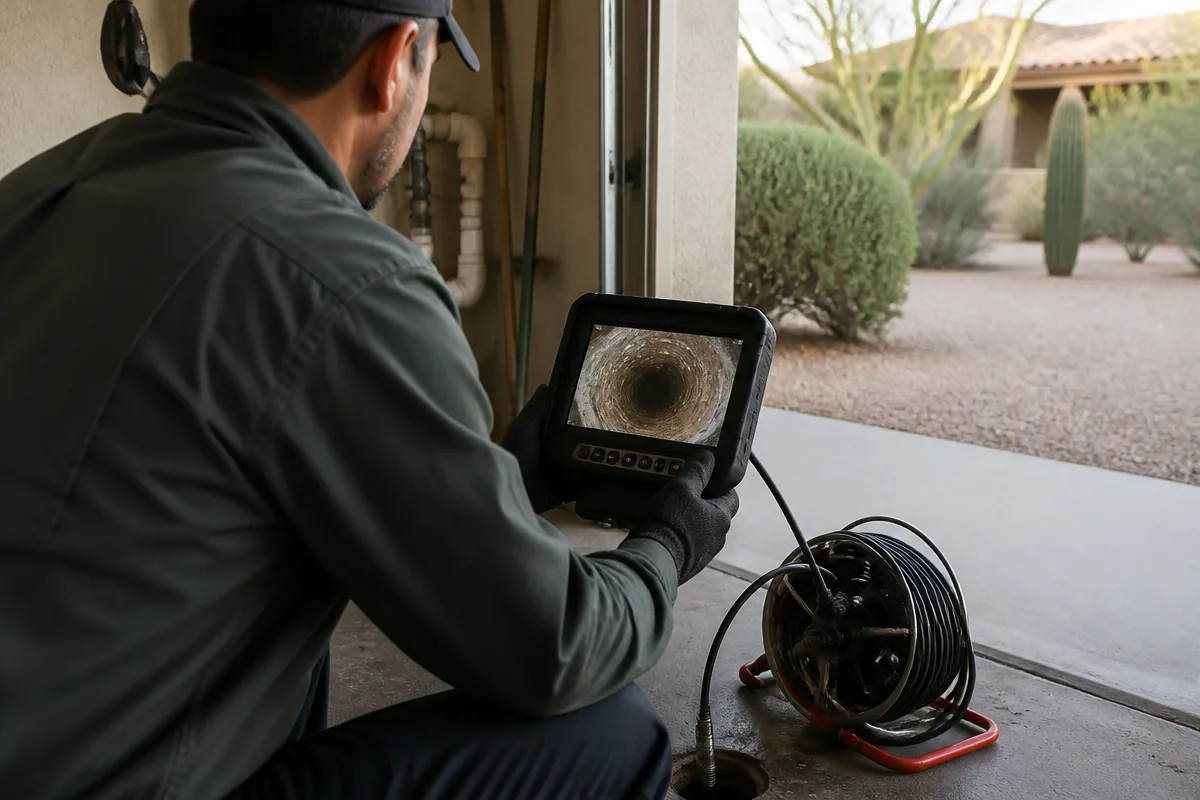
The plumber feeds the camera into the line through a cleanout or by pulling a toilet. A screen at the other end shows the view in real time, and a locator on the surface marks where the camera sits.
The footage is recorded when possible, and the plumber notes distances to problems. Clear footage also helps if a second opinion is needed.
Before buying a house, a camera look tells you whether the line is sound. Before a repair, it shows exactly where the failure is. After repeat clogs, it explains why they come back.
A follow-up recording after a repair also shows that the work did its job.
A basic inspection is one of the more affordable services, though add-ons change the price.
Ask in advance what you will receive, including the footage and any written report.
Fountain Hills was established in 1970, and the housing stock includes many decades of building. Buyers often want to know the condition of the private sewer line before closing, since the owner is responsible for it.
The Fountain Hills Sanitary District states that it maintains the street main and that homeowners handle the line on private property. A camera inspection can show whether a problem lies on your side.
Ask for a summary that lists the pipe material, the length inspected and each defect with its distance from the cleanout. The better reports include still images next to each note.
A recording is useful for lenders, insurers and home sale negotiations. Ask if it will be sent to you by email or a link.
Video cannot pass a solid blockage, so the pipe may have to be cleared before filming. Very small pipes and sharp bends can stop the camera, and the plumber should say so.
If the view is incomplete, ask what additional steps are possible rather than assuming the rest of the line is fine.
Ask the technician to pause on anything that looks unusual and explain it. A change in pipe material, a belly where water pools, a joint that has shifted and a mass of roots each have a different cause and a different fix. The footage also shows the depth measured from the cleanout, which lets the contractor mark spots on the ground.
Buyers should request the footage together with a short written summary of the findings. A sound line is worth knowing about, and a damaged one is a negotiating point.
Mend a broken, sagging or root-packed sewer pipe, from a short patch to a longer run.
Lay a new private sewer pipe between the house and the street when patching no longer works.
Unblock a backed-up sink, tub, laundry or main drain and trace what caused the clog.
Ask when you book. Many contractors record and share it, and some provide only a summary. A copy is useful for repairs and for a home sale.
A routine look at a home line frequently finishes in under an hour, though access and pipe condition change that.
It can show cracks, low spots and buildup that cause odor, though some smells come from dry traps or vents. The plumber checks both.
It is a smart addition. The owner is responsible for the private line, and footage shows if you are inheriting a problem.
Ask when you call. Inspections are often booked in daylight, though a backup that needs eyes on it quickly can be reported at any hour.
Call and ask about a camera inspection. The dispatcher can book the visit.
Service area centered on Fountain Hills and nearby Maricopa County cities.