Drain Cleaning & Unclogging
Unblock a backed-up sink, tub, laundry or main drain and trace what caused the clog.
Jetting scours the inside wall of a drain with water at very high pressure. It removes buildup a cable only punches through, so the line flows like new.
Ask for a camera look before and after, so you can see the pipe condition.
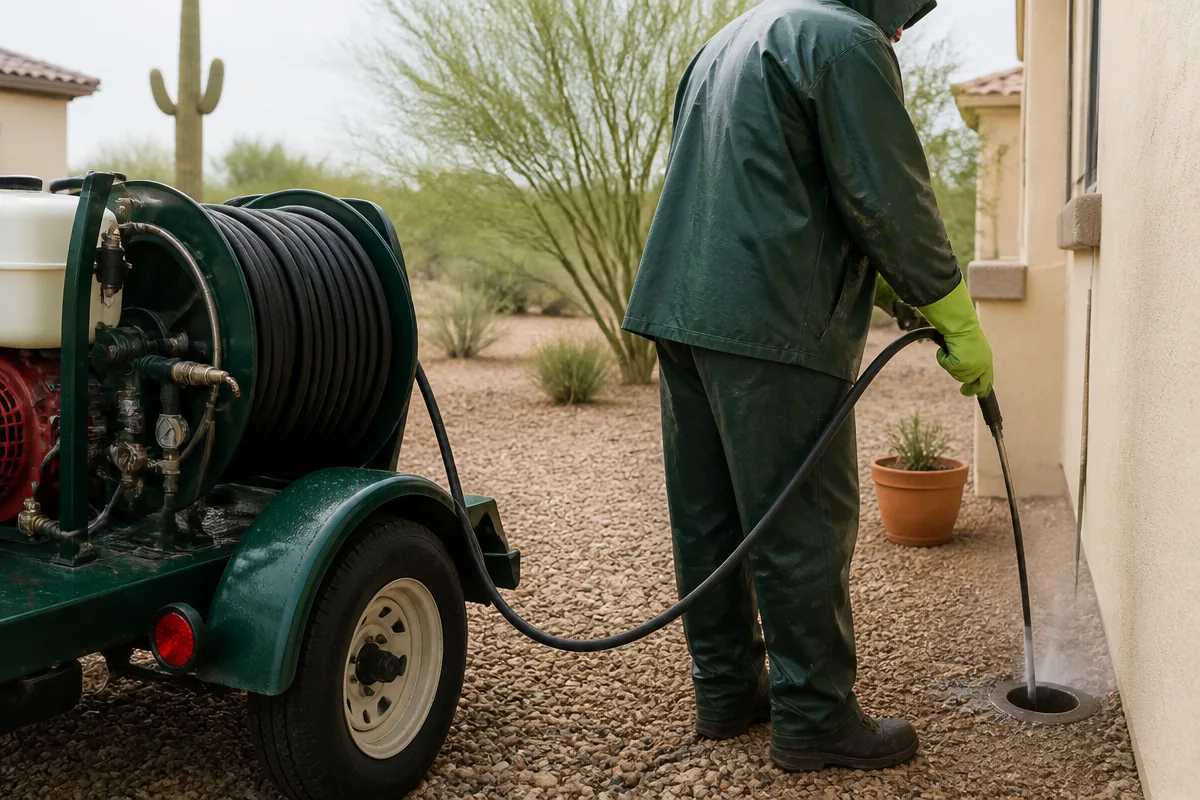
A hose fitted with a specialty nozzle goes into the pipe through the cleanout. Water exits the nozzle in several jets, with some pushing the hose forward and others scouring the pipe wall.
As the hose is pulled back, the debris is flushed ahead of it toward the larger line. The result is a pipe wall that is clean rather than just opened.
A cable punches a hole through a clog and leaves most of the buildup on the wall. The hole fills in again as new material sticks. Jetting removes the buildup itself, so the line stays open longer.
Cables remain the right tool for a simple local clog. Jetting is better for repeat stoppages and for main lines with heavy coating.
EPCOR supplies Fountain Hills water, and a public data summary lists it as moderately hard at roughly 5.3 grains per gallon. Over years, minerals form scale inside drains, especially where hot water runs.
Jetting can strip some of that scale. If the pipe is thin or corroded underneath, ask your plumber whether jetting will help or whether a repair is the better step.
Jetting is a specialty service, and price depends on equipment and on the line. Expect these factors to matter.
Ask whether the camera inspection is part of the quote and whether footage is saved for you.
Water pressure can stress a pipe that is already broken, cracked or separated. A camera look first shows whether the line is sound enough for jetting.
Old clay or fiber pipe can be damaged by high pressure. If the camera shows weakness, the plumber may suggest repair first and cleaning later.
The plumber needs access to a cleanout, and a clear path to it helps. Move vehicles and storage away from the area, and ask where wastewater will exit during the job.
Plan to keep fixtures unused during the work. Afterward, run water through each drain to confirm the flow.
A jetting visit takes longer than a snake and uses more equipment. The technician needs a cleanout or an access point, and a clear place to set up the hose and the water supply. Clear the area around the cleanout and tell the dispatcher about any steps or gates in the way.
After jetting, ask for a follow-up camera look when the line has a history of trouble. It shows whether the pipe wall is clean and whether a defect remains.
Jetting suits repeat or stubborn blockages.
A cable bores a channel through the blockage. A water jet scours the pipe wall, flushing debris out. That difference is why jetting holds longer on grease and scale. The drain cleaning page explains when a simple cable is enough.
The crew needs a way into the pipe, typically a cleanout fitting. If there is none, the crew may have to lift a toilet or enter by way of a roof vent. Ask about this on the call.
Pipes in poor condition may not suit jetting. A cracked or collapsed line can suffer from the pressure, so a camera pass beforehand is a sound step. The camera page describes it.
Homeowners use jetting for main lines and stubborn kitchen branches. Landlords use it to keep tenant complaints down. Restaurants and shops use it on drains that carry fat. Tell the dispatcher what the line serves and what has already been tried.
The price depends on length, access and condition. You should hear a figure before work begins.
Unblock a backed-up sink, tub, laundry or main drain and trace what caused the clog.
Use video from inside the sewer pipe to decide on a repair or to check a house before you buy it.
Mend a broken, sagging or root-packed sewer pipe, from a short patch to a longer run.
It depends on the condition of the pipe. Plumbers usually run a camera first, and fragile or cracked lines may need repair before jetting.
Only if the line clogs regularly. Some kitchen and main lines benefit from a yearly cleaning, while a pipe that is clear may not need jetting at all.
It cuts and washes out fine roots and carries the debris away. Thick roots may need a cutting tool first, and roots will regrow if the pipe is cracked.
It uses more than a cable, but the plumber supplies water from the truck or a hose connection. Ask about the source before the job.
Call the line at any hour. If the main line is pushing water back into the house, say so up front. Availability depends on the contractor's schedule and equipment.
It depends on the pipe. A camera look beforehand shows whether the pipe walls can stand high pressure.
It can cut and flush fine roots. Thick roots may need a cutting head first, and a repair if the pipe is damaged.
Snaking opens a path through the clog. Jetting scrubs the pipe wall clean, which lasts longer on grease and scale.
It helps a great deal. Without one the crew may work through a fixture or vent, which takes more time.
Only when buildup keeps returning. Some kitchen lines are cleaned on a schedule, and the plumber can suggest one.
Call and describe how often it returns. A dispatcher will explain whether cleaning or a camera look comes first.
Service area centered on Fountain Hills and nearby Maricopa County cities.