Water Heater Repair
Diagnose cold showers, a dripping tank, a rumbling heater, or a pilot or element fault.
Gas piping feeds the range, dryer, water heater and outdoor appliances. Installation and repair are safety work, so the details matter. Smell gas? Everyone goes outside first. The call to 911 or the gas company is made from out there.
Gas odor? Leave the building and place your call from a safe distance, to 911 or to the gas company.
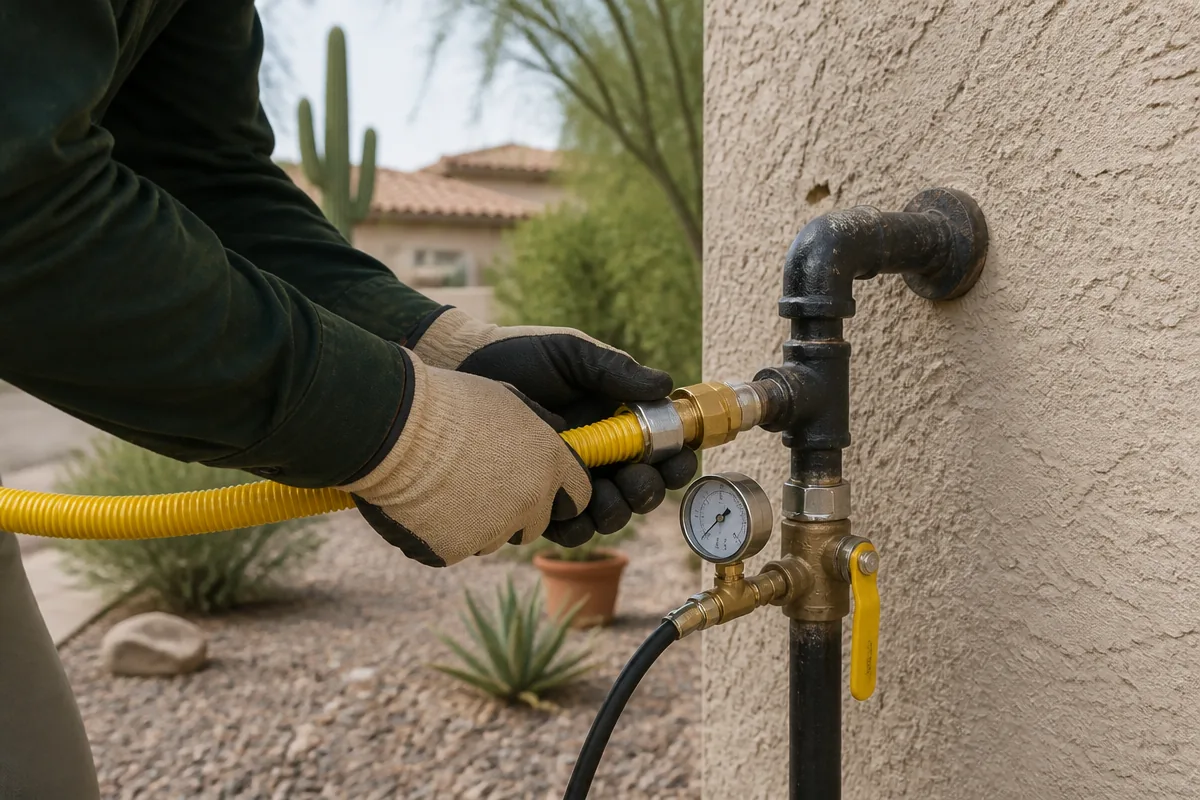
Plumbers run steel or flexible gas pipe to appliances, set shutoff valves and test the system for leaks. New runs are sized for the total load of every appliance on the line.
A pressure test proves the pipe holds. Some jurisdictions require a permit and an inspection for new gas work.
Typical jobs include a new line to a range or dryer, a gas stub for a barbecue, a fire pit or an outdoor kitchen, and a replacement for a corroded section. Switching an appliance from electric to gas often needs a new line.
Outdoor fire features are popular in desert yards. They need a properly sized line and a shutoff that is easy to reach.
Length, materials and difficulty set the price of a gas job. These are the main factors.
Ask if the permit and pressure test are included in the quote.
Desert patios often have grills, fire tables and outdoor kitchens, and each one needs gas on a properly sized line. Running pipe underground calls for the right material and depth.
Before digging, utility locates are required. Your contractor should arrange them, and the work may need a permit from the town.
Gas leaks come from loose fittings, corroded pipe, damaged flexible connectors and worn valves. Suspected leaks are checked with a detector or a soapy-water test, not with a flame.
Repair may involve tightening a fitting, replacing a section or swapping a connector. The line is retested before gas is restored.
Know where your main gas shutoff is, and keep a wrench near it if your meter requires one. Teach everyone in the house to leave first and call afterward.
Carbon monoxide alarms and gas detectors add a layer of warning. Test them when you change your clocks.
The plumber measures the load of every appliance on the line, sizes the pipe for the combined demand and chooses a route that stays clear of electrical cable and heat sources. Before any appliance is connected, the new piping is tested under pressure and checked with a leak solution at each joint.
A permit and an inspection are normally part of a new line. The contractor should be able to tell you what your town requires and who schedules the inspector. Do not use an appliance until the inspection is signed off.
Utilities add a sulfur-like scent to gas so a leak is noticed, often described as rotten eggs. Other signs include hissing near a pipe, a dead patch of plants above a buried line, and a pilot flame that keeps dying. If you notice any of them, leave first and report it from outside.
Never test for a leak with a flame. Soapy water brushed on a joint will bubble if gas is escaping, but only after everyone is safe and the gas company has been told.
Natural gas should never be ignored.
Leave the house at once with everyone inside. Do not flip switches, use a phone inside or start a vehicle in an attached garage. From outside, call 911 or the gas company.
Once the utility has declared the house safe, phone the plumbing line for the repair. A gas leak is not a do-it-yourself fix, and soapy water tests are a job for a qualified person.
Adding a line for a range, dryer, outdoor grill or fire pit starts with capacity. The plumber checks the meter, the existing pipe size and the distance to the appliance. Permits and inspection usually apply.
Callers also ask about converting between natural gas and propane. That depends on the appliance and the fuel supply, so bring the model when you call. Propane delivery is not part of this service. The new construction page covers gas lines in a new build.
Diagnose cold showers, a dripping tank, a rumbling heater, or a pilot or element fault.
Descale the heat exchanger, decode error messages and repair or replace on-demand units.
Plumbing for new builds, casitas and room additions, from rough-in to finish.
Once you are out of the building, avoid switches and flames. Then tell 911 or the gas company what you smelled. Call a plumber after the supply is made safe.
Often yes. The contractor can explain local requirements and take care of the paperwork.
Yes, with the right pipe size and shutoff. A plumber sizes the line for the appliance and tests it before use.
With a detector or a soapy-water test on fittings. Never use a flame.
Get everyone out, leave doors open if you can and avoid switches and flames. Make that call only after you are outdoors. Call this line about repairs once the supply is safe.
Yes. Get everyone out and phone the gas company or the emergency line once you are in the yard. The plumber comes afterward for the repair.
Usually yes. The plumber checks capacity, routing and permit needs first.
Ask when you call. It depends on the appliance and fuel supply, and the dispatcher can say what is possible.
New lines generally do, and an inspection follows. The plumber can explain how it works in your town.
Often yes. Give the model and the new location so the crew knows what line length and fittings to bring.
If there is a smell, leave first. For installations and repairs, call the line and a dispatcher will help.
Service area centered on Fountain Hills and nearby Maricopa County cities.