Gas Line Installation & Repair
Put in or mend gas piping for ranges, dryers, grills and patio fire features.
New builds are plumbed in stages, from the pipes in the ground to the faucets on the sink. A clear plan at the start prevents expensive changes later.
Share plans, the fixture count and the schedule when you call.
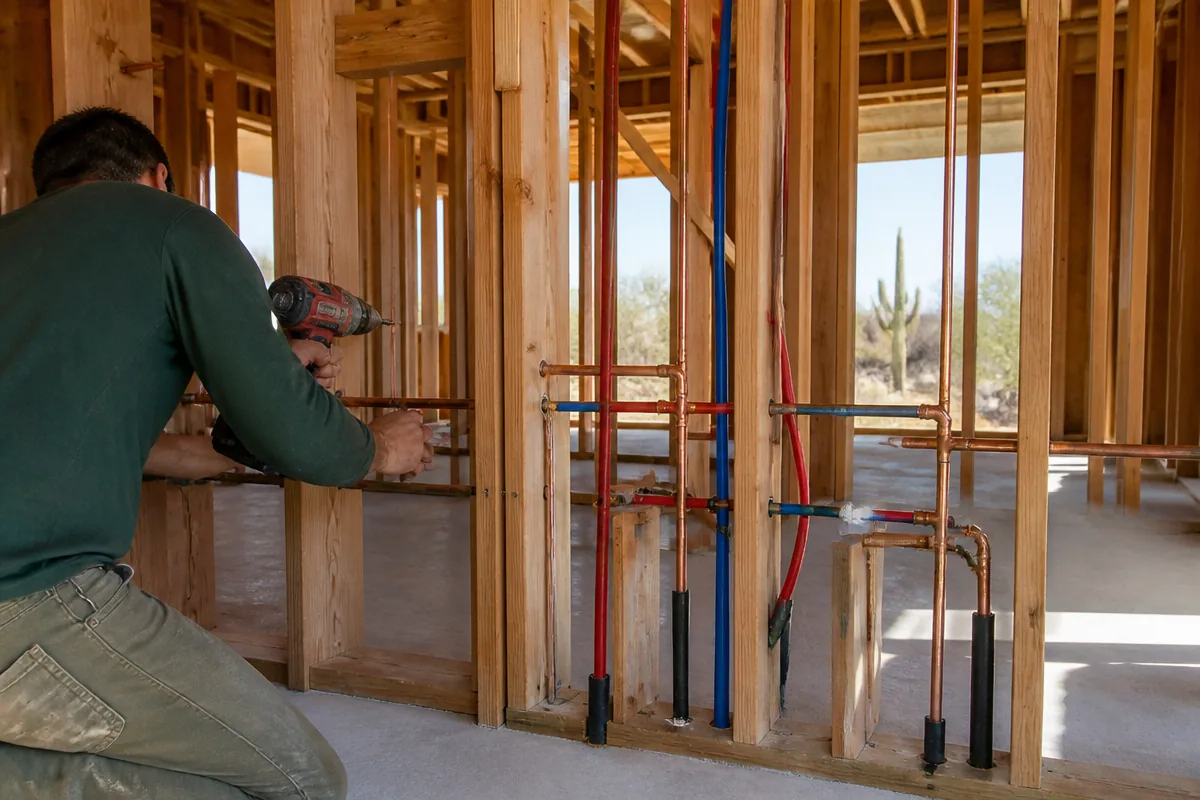
The plumber reads the plans, counts fixtures and works out pipe sizes, vent paths and drain slopes. Decisions about water heater location, gas runs and a softener loop are easier before framing.
Bring any special requests early, such as a pot filler, a bidet, outdoor kitchen or a large soaking tub.
Underground work sets the drains and sleeves before concrete. Mistakes here are expensive to fix, so measurements are double-checked.
Rough-in places supply lines, drains and vents inside walls. Inspectors check the work before it is covered, and pressure tests confirm the supply lines hold.
Fountain Hills sits on hillsides, so floors and lots step up and down. Drains on a lower level may sit below the street main and need a pump or careful routing.
Ask your plumber how the design handles drainage on a sloped lot, and whether any fixtures need special attention. Town permits and inspections apply to new work.
Plumbing bids for a new build depend on the plan. These factors matter most.
Compare bids line by line, since a low total can leave out fixtures or permits.
After drywall and paint, the plumber sets toilets, sinks, faucets and appliance connections. The water heater is hooked up, gas is tested and the system is flushed.
A final inspection checks everything against code. Keep the paperwork for the house file.
Adding a bathroom or a guest house ties new lines into the existing system. The plumber checks pipe sizes, water pressure and sewer capacity.
Remodels often reveal surprises behind old walls. A contractor with experience budgets time for them.
The cheapest time to change a plumbing plan is before framing closes in. Walk the layout with the builder. Look at where each fixture sits, where the water heater will live and how far hot water must travel to the kitchen and the farthest bathroom. A long run means a long wait for hot water and more wasted gallons, and a second small heater or a recirculating loop is easier to plan on paper than to add later.
Decide on the gas appliances early as well. A range, a dryer, a grill and a patio fire feature all need piping sized for their combined load. A meter or regulator specified for the house alone may not carry them. Ask the builder who is responsible for each permit and each inspection, so no stage waits on a missing sign-off.
Many lots around Fountain Hills slope, which affects drain routing. A sewer pipe needs a steady fall toward the street connection, and a house set below the street may need a pump or a backwater valve to protect the fixtures from a backup. These details belong in the plan, and a plumber who has seen the site can flag them before excavation begins.
Slab foundations bury the drain and supply runs under concrete, so a mistake becomes expensive once the pour is done. Ask for a pressure test on the supply lines and a water test on the drains before the slab is poured, and keep the test records with your house file.
Ask which fixtures and brands the bid assumes, and what happens to the price if you change them. Find out whether the quote covers permits, inspections and the final connection to the meter, and who handles a failed inspection.
Request a written schedule that names the rough-in, top-out and finish stages, and ask how the contractor communicates delays. A good answer is specific, with dates tied to the builder's milestones.
New construction plumbing happens in stages. Rough-in sets drain and supply pipe before walls close. Top-out and inspections follow, and trim fixtures go in at the end.
Builders and owner-builders should share plans early. The plumber checks fixture counts, gas appliances and water heater location before pipe is cut.
Delays in framing and inspections move the schedule, so the dispatcher should know your timeline when you call.
Callers often ask for gas lines for a range, dryer, grill or fire feature. They also ask about the heater type, softener location and outdoor spigots. Decide these before rough-in, since moving pipe later costs more. The gas line page explains the gas side.
Put in or mend gas piping for ranges, dryers, grills and patio fire features.
Add or replace a shower, tub or valve, with the drain positioned correctly.
Replace a failing tank and choose the capacity, fuel and location of the next one.
Early, while plans can still change. Rough-in timing depends on framing, so the plumber needs your schedule.
Yes. Rough-in and final inspections are standard, and the contractor normally schedules them.
Usually, yes. Share the plans and tell the dispatcher what the addition includes.
Lower-level fixtures may need special routing or a pump. A plumber reviews the plans and the slope.
The line is open around the clock. Planned rough-in and trim-out follow the builder's calendar, yet a burst line or a flooded slab on a job site can be reported immediately.
Ask the dispatcher about project size and timing. Send plans or a fixture list when you call.
Before framing is done. Rough-in needs access to open walls and floors.
Usually, as part of the project. Permits and inspections apply.
Phone in and outline the project. A dispatcher will help you reach a contractor.
Service area centered on Fountain Hills and nearby Maricopa County cities.