Sewer Camera Inspection
Use video from inside the sewer pipe to decide on a repair or to check a house before you buy it.
The sewer line carries everything out of the house. A cracked, sagging or root-filled line lets water back up, makes floors smell and can leave the yard damp. If sewage is surfacing in a tub or floor drain, stop running water and phone right away.
Stop using water if sewage is rising, and keep people and pets away from the area.
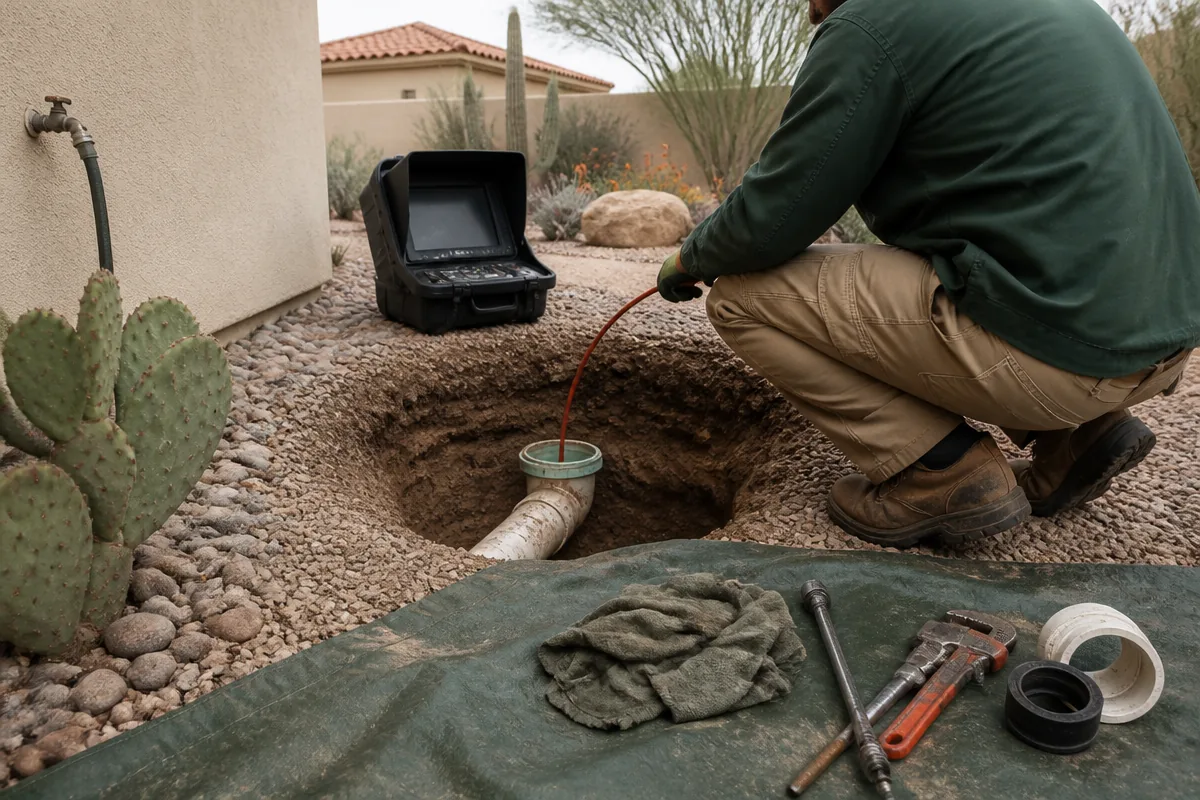
Common failures include cracks from soil movement, roots entering joints, offset joints where sections drift apart and low spots that hold waste. Older materials such as clay and fiber pipe fail in their own ways.
The plumber needs to see inside the pipe to know which one you have. A camera inspection is usually the first step in any repair plan.
A short failure can be fixed by digging and replacing a section. Pipe lining coats the inside of a sound but cracked line with a new resin layer, and it needs less digging.
Pipe bursting pulls a new line through the old one, breaking it apart as it goes. Each method has limits, so ask why the contractor prefers one over another.
Sewer jobs differ more than most plumbing work. These are the main reasons.
Ask to see camera footage and get a written scope before signing off on a major repair.
The Fountain Hills Sanitary District says it maintains the main sewer line under the street. The homeowner is responsible for the line on private property, including damage from roots.
Before paying for a dig, have the plumber show on camera where the problem sits. That settles whether it is yours or the District's, and the District asks you to call it if the main may be involved.
The plumber locates the failure with a camera and a locator, marks it on the ground and calls for utility locates before digging. Water to the house may be needed for the camera but is off during repairs.
After the work, the line is tested again with a camera or a flow test. Ask for footage of the finished repair for your records.
Sewer work on private property usually calls for a permit. Your contractor normally pulls it and arranges the inspection, but confirm that this is included in the quote.
If you rent, tell your landlord right away. Repairs to the line are typically the owner's responsibility.
A line problem shows up in more than one place.
Stop all water use. Do not flush, run the dishwasher or start laundry. Each gallon added has to go somewhere, and the lowest opening in the house is where it escapes.
Keep kids and animals out of the room where wastewater is showing, and wash hands after any contact. A cleanout cap outside can sometimes relieve pressure, but opening it is a job for the crew.
Phone the 24/7 line and say that wastewater is rising. The dispatcher can explain the next step and the likely timing. Your sewer is connected to the Fountain Hills Sanitary District main, so the crew may also check whether the blockage is on your side or the street side.
Cutting a trench without knowing where the break is wastes money. A camera shows the crack, offset joint, root mass or bellied section, and a depth reading helps plan the dig. The inspection page explains what you receive.
A short failure may need only a spot repair. A long run of damage may call for lining or full replacement, and which of those is available depends on the pipe condition. The replacement page compares them.
Broken drain pipe inside the house, under a slab or between fixtures, is a separate repair from the lateral in the yard. Tell the dispatcher where you see the symptoms so the right crew comes. Septic tanks are not on the service list, so if your property has one, mention that early.
Use video from inside the sewer pipe to decide on a repair or to check a house before you buy it.
Lay a new private sewer pipe between the house and the street when patching no longer works.
Wash grease, scale and roots off the pipe wall when a cable only opens a narrow path.
If several fixtures back up together or the cleanout holds water, the main line is involved. A camera confirms where the fault sits.
The Fountain Hills Sanitary District says it is responsible for the main sewer line in the street. Call the District if a plumber finds the fault beyond your property line.
Lining can be a good option for a sound pipe with cracks. It does not suit pipe that has collapsed or shifted, so ask for the camera evidence.
Roots follow water into cracks. Cutting them is temporary, and a lasting fix means sealing or replacing the damaged joint.
Stop every faucet, toilet and appliance that drains. Keep children and pets away from affected floors and call the line. The first step is often clearing the blockage, with repair planned after a camera look.
If more than one fixture backs up, or a low drain fills when you flush, the main is the likely culprit. A single slow sink is usually its own branch.
In some cases. Lining or pipe bursting can avoid a long trench, but the choice depends on the damage and the pipe. A camera view tells which options fit.
Utilities generally maintain the main in the street. Ask the Sanitary District where its responsibility ends before you pay for work on that section.
Roots enter through joints in any yard that has mature trees near the pipe. A camera shows whether roots are the cause and how far they reach.
Septic tanks are not on this site's service list. Tell the dispatcher what your property has, and they can say whether it is covered.
Do not run any more water, and get the 24/7 line on the phone. Tell the dispatcher which fixtures are affected.
Service area centered on Fountain Hills and nearby Maricopa County cities.