Water Line Repair & Replacement
Fix, or renew, the underground water pipe that serves your house, starting at the meter.
A shower that trickles, a faucet that sputters or a house with no water at all each have a traceable cause. The work is sorting out whether the problem sits at the street, at the main or inside the walls.
Tell the dispatcher which taps are weak, whether hot and cold both suffer and whether the neighbors have water.
Start by comparing taps. If a single sink or shower runs slowly, the fixture is almost always the culprit, since scale packs aerators and showerheads with grit. Unscrew the tip, soak it in vinegar and see whether the stream returns.
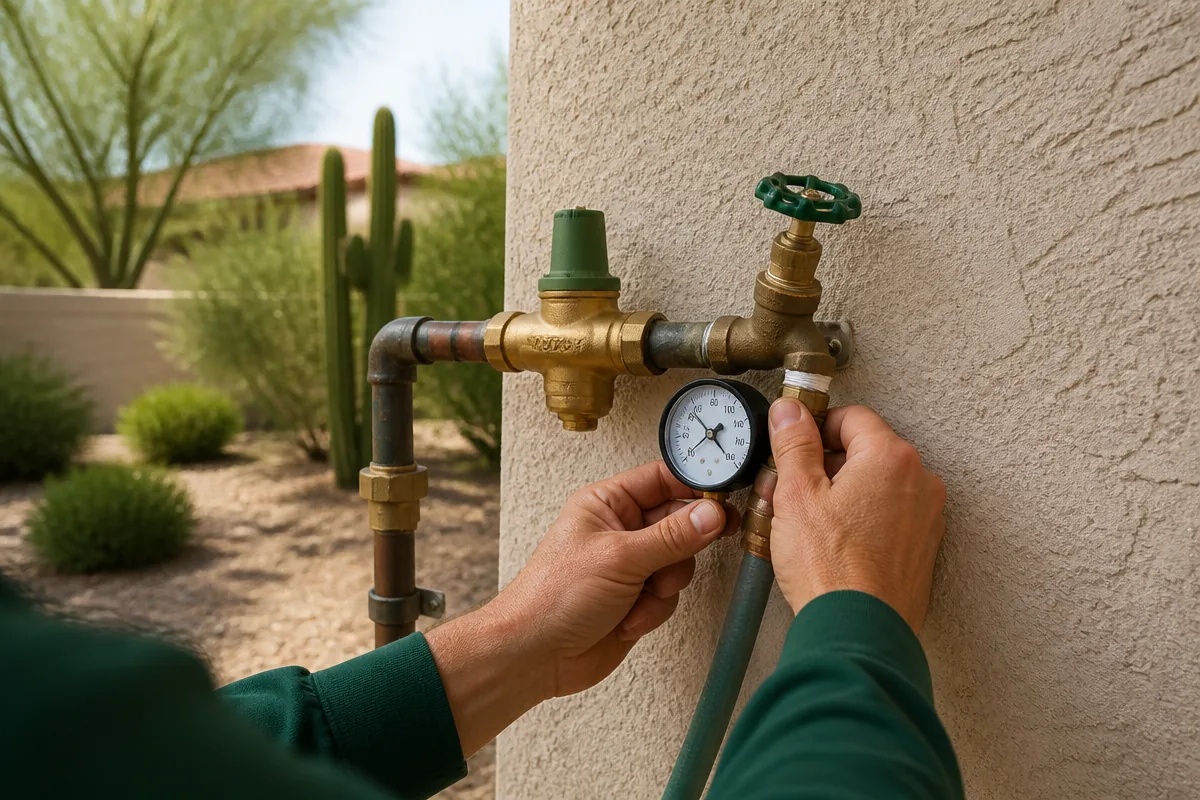
When every tap in the house is weak, the cause sits upstream of all of them. The main valve may be partly closed, a pressure regulator may be wearing out, or the buried line may be leaking before it reaches the house. A reading at an outdoor hose bib settles which.
Callers often say the bill is paid and the water simply vanished. Look first outside the house. Check whether neighbors have service, and ask EPCOR whether work or a break is shutting the street down. A road crew or a main repair can cut water to a block for hours.
If the street is fine, inspect the house main and the meter shutoff, since a valve nudged shut during yard work looks exactly like an outage. When both are open and the taps stay dry, a broken line or a failed regulator is next on the list, and that is the time to call.
The fix can be a ten minute cleaning or a pipe replacement. These factors decide where it falls.
Ask for the diagnosis first and a clear figure before any part is replaced.
Elevation changes across Fountain Hills, and pressure can differ from one street to the next. A pressure reducing valve near the main protects the fixtures, and when it fails low the whole house feels it.
Homes with older steel supply pipe may also lose flow as scale narrows the inside of the pipe. No regulator swap fixes that. The repiping page covers what replacement involves.
The plumber screws a gauge onto a hose bib and notes the resting pressure while every fixture is off. Then the reading is repeated with water running. A large drop between the two means the pipe is restricted or undersized. A low static reading points toward the regulator, the main valve or the supply.
From there the crew narrows the zone. Closing the valve at the house and watching the meter tells whether a buried leak is stealing pressure. Isolating hot from cold exposes a heater problem. Each step rules something out so that a part is not replaced on a guess.
Each pattern points to a different part of the system.
Open the main valve at the house all the way. It should turn a full quarter or the handle should line up with the pipe. A gate valve with a round wheel needs several turns and often sits half open.
Run a hot tap and a cold tap at the same sink. Weak hot with normal cold sends the search to the water heater and its shutoff. Both weak sends it to the supply side.
Look at the meter with every tap closed. A dial that moves suggests a leak in the buried line, which steals pressure. The leak detection page explains the next step.
Write down when the weakness began and whether it followed work on the street or in the house. That detail often names the cause.
A pressure reducing valve that has drifted low can be adjusted or replaced. A main valve that is worn or seized is replaced with a quarter-turn type, which also makes future shutoffs easier.
Scaled steel pipe cannot be cleaned back to full size, so the answer is replacement. A leaking yard line is repaired or renewed on the water line page. Cost follows access and pipe type, and a figure should be given before work begins.
Aerators, showerheads, cartridges and supply lines can each restrict one fixture. They are the cheapest fixes, which is why the diagnosis checks them first.
Fix, or renew, the underground water pipe that serves your house, starting at the meter.
Find where hidden water is escaping, whether it is behind a wall, under a floor or along the buried line.
When patching stops holding, replace worn supply piping throughout the house.
Pressure in the range of about 40 to 60 psi is commonly treated as normal for a home. Plumbing codes cap static pressure at 80 psi, so lower readings feel weak and much higher readings strain the pipes.
Look at the house main and the meter shutoff, because a handle bumped during yard work is a frequent culprit. If both are open, phone and mention that the street has water. A broken line or regulator is likely.
Yes. A failing regulator can lower pressure to the whole house, and a clogged screen inside it restricts flow. A plumber can clean or replace it after reading the pressure.
No. Many weak showers come from a scaled showerhead or a worn mixing cartridge. Remove the head and compare the flow before blaming the supply.
Phone whenever it happens, including overnight. Say which taps are dry and whether the street has water, then ask the dispatcher about timing.
A well adds a pump and a pressure tank, which are separate trouble spots. Tell the dispatcher you have a well so the right crew is considered.
Check that the main valve is open, then call. Say which taps are affected and whether the street has service.
Service area centered on Fountain Hills and nearby Maricopa County cities.