Sewer Camera Inspection
Use video from inside the sewer pipe to decide on a repair or to check a house before you buy it.
Where repair cannot last, a replacement puts in new pipe between the house and the street tie-in. This is a big job, and the planning counts as much as the excavation.
Request video showing why a repair would not be enough.
Replacement makes sense when failures sit in more than one place or the pipe is made of a material known to fail. A single crack in a sound pipe can usually be repaired.
The camera decides this. Watch the recording yourself and have the contractor flag each problem spot on the ground.
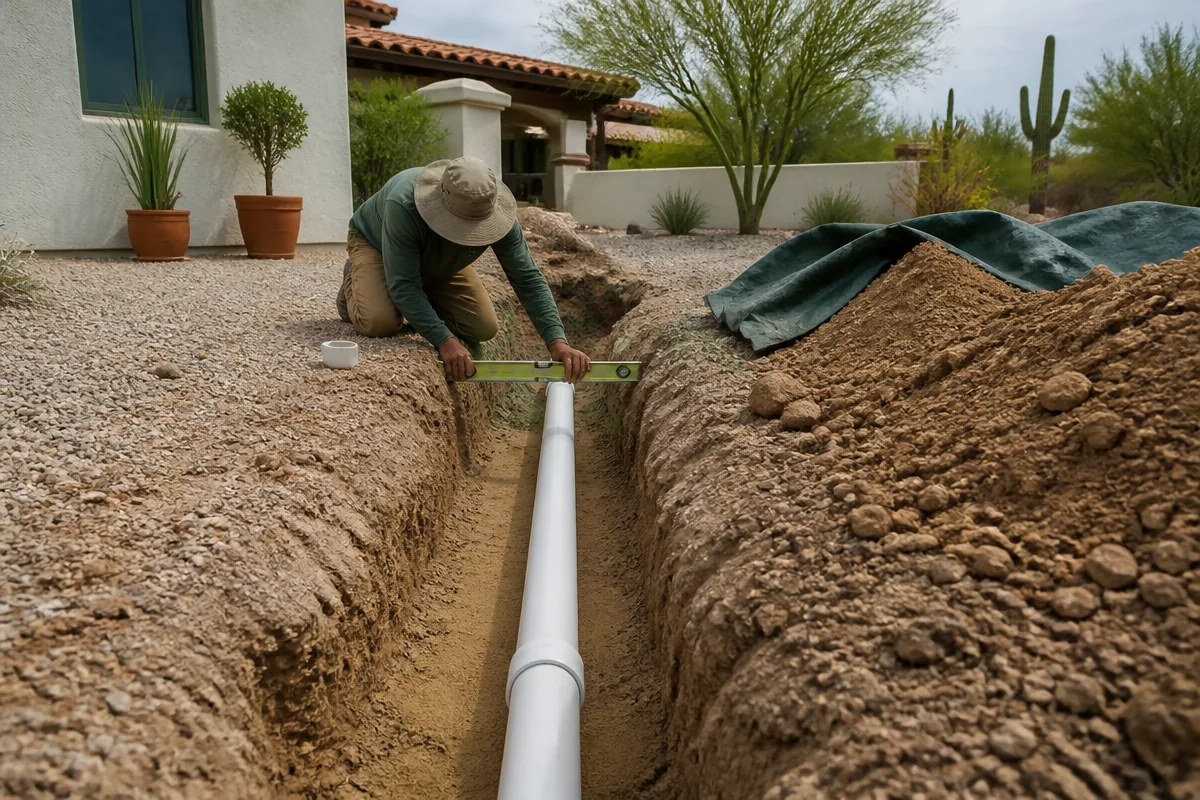
An open trench follows the pipe route and sets the new pipe at the correct fall. It is the most direct method and gives the clearest view of the soil.
With pipe bursting, a new pipe is hauled through the old one, which reduces digging. It needs access pits at both ends and suits some routes better than others.
Hillside lots in the Sonoran foothills can have rock close to the surface. Digging through hard ground takes more time, and that affects the price of a trench.
Desert trees such as mesquite and palo verde send roots toward moisture, including leaks in sewer joints. Replacing a leaking line with sealed joints also removes the water source that draws roots in.
Few plumbing jobs are bigger than this one, and quotes can differ widely. These factors explain most of it.
Collect two written scopes or more and compare what each covers, down to permits and yard restoration.
The private line runs from the house to the point where it joins the street main. The Fountain Hills Sanitary District says it maintains the main in the street, and owners handle the pipe on their property.
Ask the contractor where the connection is and who will make it. A neat tie-in prevents leaks at the junction.
Expect a trench or access pits in the yard and restricted water use for a day or longer. Plan where family members can use a bathroom, and ask whether temporary facilities are needed.
Ask about restoring the surface. Lawn and gravel are simple, but concrete, pavers and landscaping take more time.
Replacement work usually needs a permit, and an inspector may want to see the pipe before it is covered. Ask the contractor who applies, who is present at the inspection and what happens if the pipe fails a test. Ask where the excavation will be and how landscaping, irrigation lines and hardscape will be restored.
In a hillside neighborhood, access can limit the methods. A trench needs room for equipment and a slope that works for the new pipe, and a trenchless option needs entry pits at each end. A site visit answers these questions better than a phone call.
Keep the camera video of the old line and a final video of the new one, along with the permit and inspection records. They protect you if you sell the house or a dispute comes up later.
Ask about the warranty on materials and labor and what it covers, and have the terms in writing.
Use video from inside the sewer pipe to decide on a repair or to check a house before you buy it.
Mend a broken, sagging or root-packed sewer pipe, from a short patch to a longer run.
Wash grease, scale and roots off the pipe wall when a cable only opens a narrow path.
A short residential line can take a day or two, and longer or deeper routes take more. The contractor should give a schedule and explain when water use is limited.
Open trenching disturbs the yard along the pipe route. Trenchless methods reduce it. Ask what restoration is included and what is not.
Sewer work normally needs one. Have the contractor state who applies for the permit and who books the inspection.
Yes. Footage shows why replacement is needed and where the problem sits. It also gives you something to compare when you read quotes.
Replacement is scheduled work, but you can call at any hour about a line that is backing up. The urgent part, clearing the blockage, usually comes first.
Call and ask for a camera look and a written scope. The dispatcher then arranges a contractor.
Service area centered on Fountain Hills and nearby Maricopa County cities.