Leak Detection
Find where hidden water is escaping, whether it is behind a wall, under a floor or along the buried line.
A slab leak means a pressurized supply pipe is losing water inside or underneath the concrete floor. Exact location is what separates a small hole in the floor from a demolished room. Dampness rising through the floor, or tile that feels warm under bare feet, is reason enough to call whatever the hour.
These leaks seldom fix themselves. Phone sooner and ask which repair routes exist.
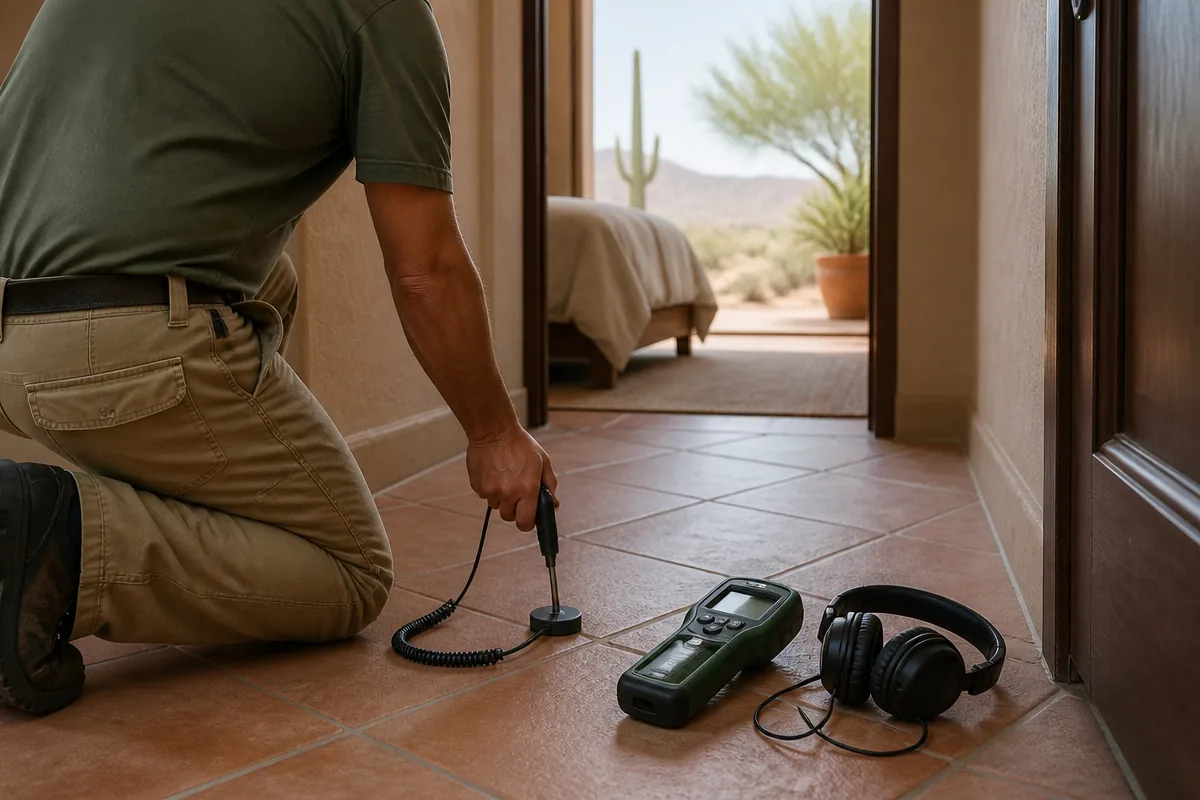
Many Arizona homes are built on a concrete slab. Builders set the supply pipes in soil or gravel and then poured concrete on top of them. The leak itself is a break in one of those pipes or in a joint along the run.
The failing pipe is usually a pressurized supply line carrying either hot or cold water. A waste line can also leak below a slab, but that one only drips while water is running down it.
Pinholes in copper can start on the outside, where the pipe meets soil or concrete, or on the inside, where aggressive water eats at the wall. A pinhole forms and slowly grows. Pipe that rubs on gravel or another line as the house settles can wear through over the years.
Workmanship matters too. A joint that was never fully seated, or a bend kinked during construction, may hold for years and then fail.
Pricing varies by how deep the leak sits and what covers it. These points explain most of the difference between quotes.
Request the detection fee and the repair price separately, plus what is included for floor restoration.
Fountain Hills is built on hillsides, so foundations vary. Some homes sit on a full slab, others on stem walls or stepped sections. Confirm the foundation type on your house before assuming a slab leak.
The town was established in 1970, and older copper lines under floors have had decades to wear. A pattern of pinholes in several rooms often points to a repipe rather than one more patch.
The plumber first confirms a leak with a meter and pressure check while the house is shut off. Then the hot and cold sides are isolated to learn which one is losing water.
Sensitive microphones pick up escaping water as the plumber walks the floor looking for the loudest point. A thermal camera helps on hot lines. The result is a marked spot, which keeps the opening small.
Once the leak is pinpointed, there are three broad paths. The options are to cut the slab and mend the pipe where it lies, to abandon that line and route a new one through the attic or walls, or to repipe the whole house.
A spot repair is cheaper at the start. Rerouting avoids more concrete work, and repiping makes sense if pinholes keep showing up in several places. Ask for each option in writing.
Close the main valve if water is surfacing, and lift rugs and furniture away from wet areas. Moisture left under flooring can warp it and feed mold.
Report the damage to your insurer early. Some policies cover resulting damage even when they do not pay to fix the pipe itself.
Slab leaks hide beneath concrete, so the clues are indirect.
Some homes sit on a concrete slab with pipe embedded below. Others sit on a raised foundation with a crawlspace, where lines hang beneath the floor. The symptoms overlap, but the search and repair differ.
In a crawlspace the plumber can often see and reach the pipe directly. That makes finding and fixing a leak simpler. On a slab, the search relies on listening and scanning from above the floor, and access may mean opening concrete.
Tell the dispatcher which foundation you have. If you are unsure, check whether there is a hatch in a closet or an access door outside.
Shut the main valve if you suspect a hot line is leaking. Turn the water heater to its lowest setting to reduce risk of scalding. Lift rugs and wipe the floor so a damp patch is easy to see.
Note which rooms feel warm and photograph them. Do not drill or cut into the floor yourself. Water pressure can carry a leak a long way from the source, and a hole in the wrong place causes more damage.
When the problem is the shared line to the home, the water line page applies instead. The leak detection page explains how a search is done.
Find where hidden water is escaping, whether it is behind a wall, under a floor or along the buried line.
When patching stops holding, replace worn supply piping throughout the house.
Dry the structure and rebuild it after a leak, a burst pipe or an appliance failure.
Typical signs include a warm patch on the floor, running-water sounds with everything off, a moving meter, wet carpet and cracks that come with dampness. The plumber confirms the diagnosis with a pressure test.
No. Pinholes tend to grow, and water under a slab can wash away support or damage flooring. Early action keeps the repair smaller.
Sometimes. Rerouting the line overhead leaves the slab intact. Whether it makes sense depends on the layout, the pipe material and how many lines have failed.
That is the aim of the search. Ask before the visit whether the spot will be marked and how large an opening to expect.
Yes, the line takes calls at any hour. If water is rising through the floor, close the main valve and then describe what you are seeing. The dispatcher will explain what can happen that day.
Treat it as urgent when water surfaces indoors, the meter spins nonstop or a floor section runs hot. Close the main valve and call. A faint, steady loss can usually wait for a morning visit.
Often the opening is limited to the spot found by the search. In some homes a reroute through walls or attic avoids concrete work entirely.
Leaks do not stop on their own, and water can undermine the slab. Treat it as urgent and schedule a search quickly.
A slab leak is in pipe embedded in concrete. A crawlspace leak is in pipe under a raised floor, where the plumber can usually reach it directly.
Coverage varies by policy and cause. Ask your insurer what it pays for locating a leak and what it excludes before work begins.
It depends on where the leak is. Marking the spot first keeps openings small, and the dispatcher can explain the plan.
Reach the main valve and close it before you call. Say where the moisture appears and how the meter is moving.
Service area centered on Fountain Hills and nearby Maricopa County cities.