Water Heater Repair
Diagnose cold showers, a dripping tank, a rumbling heater, or a pilot or element fault.
A new heater should fit the household, the fuel supply and the space. Getting those three right matters more than the brand name on the tank.
Tell the dispatcher your current heater type and how many people use hot water.
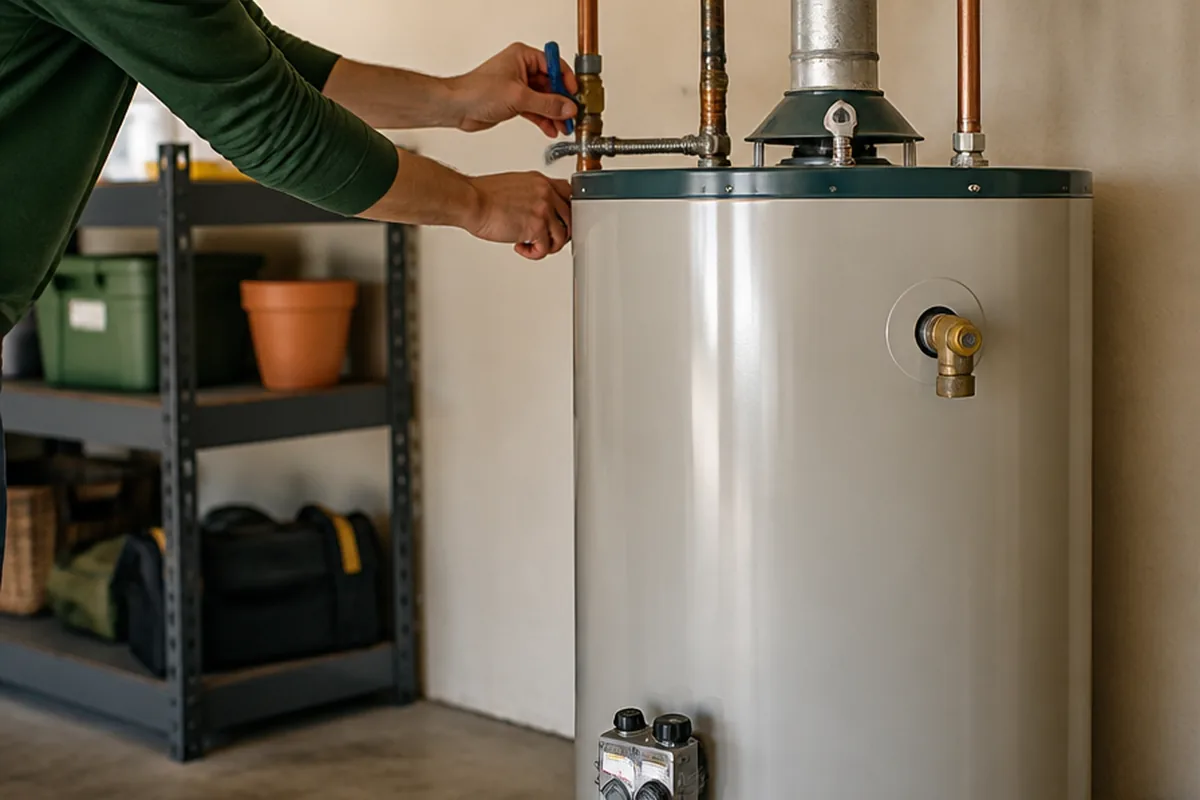
An undersized heater leaves you with cold water partway through a shower. Fuel goes to waste when an oversized tank keeps extra water hot. Look at the first-hour rating on the label, which says more than tank gallons by themselves.
Count the people at home, the bathrooms and any big soaking tub. Mention a hot-water-hungry appliance such as a high-capacity dishwasher so the plumber can size the unit.
Switching fuel types adds cost, because gas lines, venting or new circuits may be needed. For most replacements, staying with the existing fuel is simplest.
A heat pump heater draws less electricity yet needs room and airflow, and it chills the space around it. In a hot garage, that cooling effect can be a small bonus.
Replacement pricing has a few big drivers. Knowing them helps you compare bids.
Ask for an itemized quote that lists the unit, the extras and the permit separately.
Many local heaters stand in garages, closets or utility rooms, and hot summer air affects all three. Ask whether insulation or a better-ventilated location would help the new unit.
Mineral-rich water shortens the life of any heater. EPCOR's public data summary lists Fountain Hills water at about 5.3 grains per gallon, so a softener or a regular flush schedule can help the new tank.
The worn tank is emptied, unhooked and taken off site. The crew sets the new unit and connects it to the supply lines and, on gas models, the vent and gas line. A new pressure relief valve and discharge line are installed.
Ask about an expansion tank, a drain pan and a code-compliant shutoff. Rules vary by jurisdiction, so the contractor should explain what applies to your address.
Water heater replacement commonly needs a permit. The contractor normally handles it, though the quote should say so. Inspections confirm venting, gas connections and safety valves.
Skipping a permit can cause trouble with insurance or a future sale, so ask to see the paperwork when the job is done.
A new heater must meet current code, which can mean an expansion tank, a drain pan, support straps where required, a new relief valve and a discharge pipe routed to a safe spot. These parts are often not obvious in the first conversation, so ask what the quote includes.
Ask what happens to the old tank. Haul-away is common, but confirm it is in the price.
Diagnose cold showers, a dripping tank, a rumbling heater, or a pilot or element fault.
Descale the heat exchanger, decode error messages and repair or replace on-demand units.
Install a softener, or revive an aging one, so hard water stops scaling your fixtures.
A like-for-like swap often finishes in half a day, while a fuel change or a move to a new location can take longer.
Many last roughly eight to twelve years, depending on water quality and maintenance. Hard water and heat can shorten that.
Some systems need one, especially where a check valve or pressure regulator keeps water from backing into the supply. Your plumber can tell you what applies.
Household demand, fuel supply and budget all weigh on that. The tankless page explains the trade-offs so you can decide.
The line takes calls whatever the time. When a tank dies, the replacement can sometimes be done within one visit, subject to the contractor's calendar and available stock.
Describe the unit, how old it is and what is wrong when you call. A dispatcher will help line up a visit.
Service area centered on Fountain Hills and nearby Maricopa County cities.